


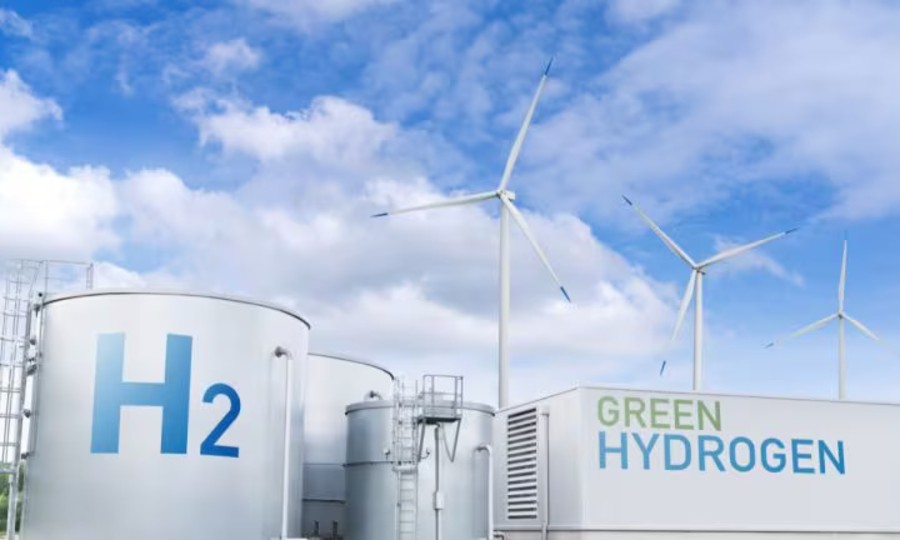
The Ministry of New and Renewable Energy announced recently that three of India’s largest ports, Deendayal in Gujarat, V.O. Chidambaranar in Tamil Nadu, and Paradip in Odisha, have been designated as green hydrogen hubs under the National Green Hydrogen Mission.
The action is a significant step in India’s efforts to speed its transition to sustainable energy and create an integrated hydrogen ecosystem. The government’s National Green Hydrogen Mission is to establish India as a world leader in the generation, application, and export of green hydrogen.
Large-scale hydrogen hubs are envisioned by the mission as key production and consumption hubs, establishing a competitive and sustainable hydrogen economy. Sarbananda Sonowal, the Union Minister for Ports, Shipping, and Waterways, stated that the honour demonstrates India’s preparation for a cleaner maritime future.
In this change, ports are crucial nodes, he stated. “Our ports will serve as catalysts for clean energy innovation as green hydrogen hubs.”India’s ports, which are ideally situated on international trade routes, will “power the region’s transition to sustainable logistics,” Sonowal continued. The mission uses a cluster-based development approach to tackle hydrogen transport issues. This approach seeks to maximise infrastructure utilisation, attain economies of scale, and improve early-stage project feasibility.
The requirements for creating Hydrogen Valley Innovation Clusters and Green Hydrogen Hubs are outlined in updated guidelines published in June 2025. MNRE is able to identify hydrogen hubs under Component B2 of the guidelines without the need for direct funding. These hubs can, however, take advantage of incentives offered by other federal and state government programmes. The ministry claims that after a thorough evaluation of the ports’ industrial preparedness and strategic potential, Deendayal, VOC, and Paradip were chosen. Under the National Green Hydrogen Mission, projects located within these zones will be eligible for a number of policy-linked incentives.
According to officials, the honour is anticipated to encourage research in hydrogen and related clean fuel technologies, increase green investments, and draw in industry engagement. India has committed to reaching net-zero emissions by 2070, and the port industry is a major factor in achieving this objective. By establishing hydrogen hubs at these ports, India will become more competitive in the global energy transition, promote energy self-reliance, and increase the use of clean fuels. “This is a pivotal point in India’s maritime history,” Sonowal stated. “We are creating a sustainable development ecosystem under Prime Minister Narendra Modi’s leadership, which will steer India in the direction of a net-zero future.”





Comments are closed