


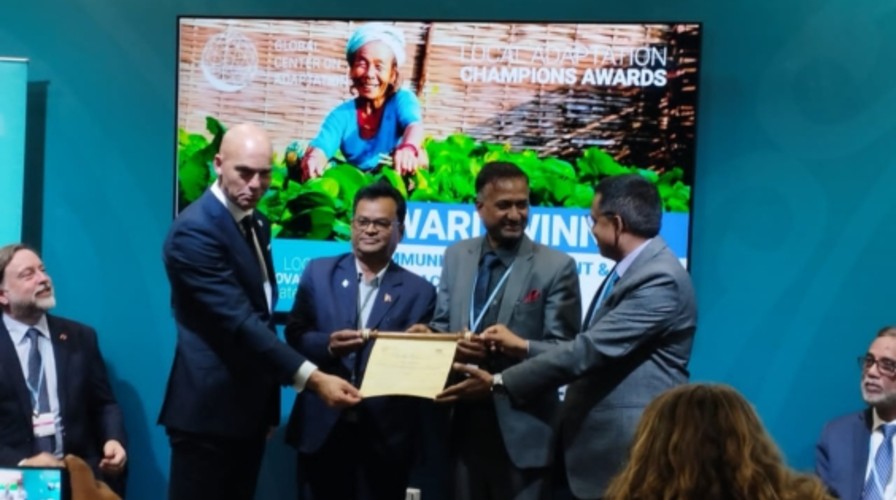
During the COP30 climate summit in Belém, four community-led projects from India, Kenya, Peru, and a worldwide heritage network were recognised for their creative, locally driven responses to the climate issue with the 2025 Local Adaptation Champions Awards. The awards were given out by the Global Centre on Adaptation in collaboration with the Foreign, Commonwealth and Development Office of the United Kingdom to honour locally driven initiatives that increase climate change resilience.
Each winner will get technical sponsorship from the Adaptation Fund and €15,000 ($17,325) to further their work. GCA CEO Patrick Verkooijen stated, “Today we honour those who lead every day on the frontlines of climate change.” “Adaptation produces tangible, long-lasting results when local actors are empowered.” These local leaders are revolutionising climate action from the ground up, and the world needs to support and collaborate with them.
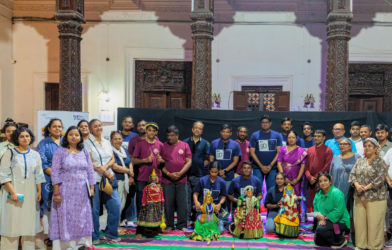
The winners, who were chosen from 20 shortlisted projects, represent four categories: women’s livelihoods, nature-based solutions, health, and citizen science. Their study demonstrates how knowledge, culture, and collaboration are helping communities reshape adaptation. A global organisation with operations in 35 countries, Preserving Legacies, won in the citizen research category for assisting communities in adapting to climate stress by fusing traditional knowledge with contemporary research.
The organisation gives elders, young people, craftspeople, and historical custodians the tools they need to preserve cultural landscapes, from the mud tower houses of West Africa to the holy places of the Himalayas. Its efforts show that innovation may be built upon tradition.
The organisation’s director of science, Dr Salma Sabour, stated that heritage involves more than merely preservation. “The goal is to create a resilient future that is influenced by the identities and values of the local population.” For a climate-responsive health and psychosocial programme that helps people in Nairobi’s informal settlements, Foundation for Tomorrow was given the Health award in Kenya.
The programme provides emergency preparedness, trauma counselling, and healthcare directly to communities that are at risk. It places a strong emphasis on inclusion, making sure that women, young people, and people with disabilities have important roles in making decisions.
“By decentralising services and tackling stigma, our model breaks down barriers to healthcare,” stated George Kakala, executive director of F4T. “Here, resilience is a lived experience with roots in community ownership and equity.” In order to address the water shortage in Lima and the surrounding areas, Peru’s Aquafondo won in the Nature-based Solutions category for restoring pre-Incan water systems in the Andes.
In order to restore groundwater and stabilise ecosystems, the NGO has worked with rural communities to restore historic canals, marshes, and reservoirs. In order to guarantee water security, the endeavour combines contemporary science with traditional expertise.
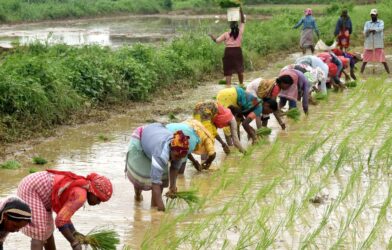
According to Mariella Sánchez, executive director of Aquafondo, “This is more than a nature-based solution.” It’s a solution based on togetherness, dignity, and memory. Resilience is sown by sowing water. In the once drought-stricken and impoverished Kalahandi region of India, AJSA India won the Women’s Livelihoods award for bringing together over 5,500 tribal women farmers into cooperatives that promote climate-smart agriculture.
These women organise community decision-making, oversee crop cycles, and operate electric “Green Express” carts for market access. Their efforts have changed gender roles in local government and increased income.
According to Manoranjan Behera, executive director of AJSA, “Many women who had no voice before are now board members and community trainers.” “Our model uses women’s leadership to address climate vulnerability and inequality.”




Comments are closed