


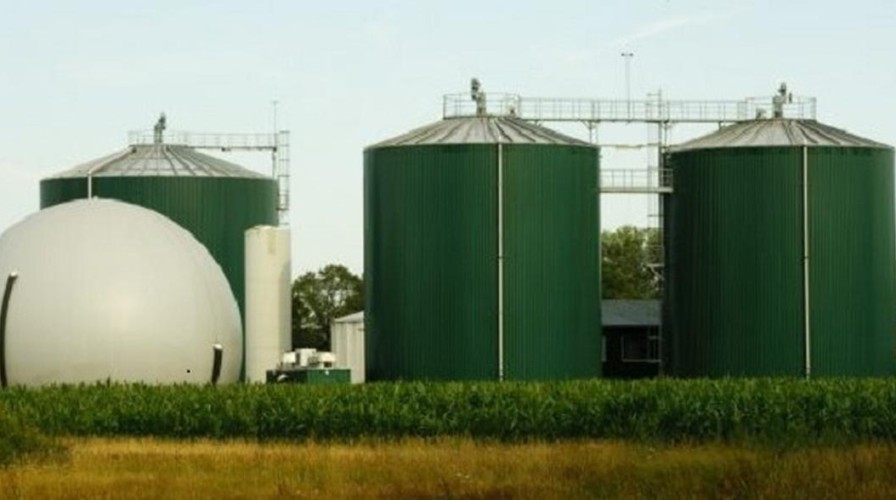
The government announced on Wednesday that India has steadily expanded across various bioenergy categories, adding 2,361 megawatts of biomass-based power capacity, 228 MW of waste-to-energy capacity, and over 288,000 biogas plants over the previous ten years.
The Ministry of New and Renewable Energy stated in a written response to parliament that the capacity additions were funded by several central government programmes and are now being pursued under the National Bioenergy Programme.
According to the ministry, the development represents ongoing policy support for bioenergy projects that turn organic waste, agricultural waste, and other feedstocks into fuel and electricity, thereby boosting the growth of renewable energy in India.
Notified in November 2022, the National Bioenergy Programme Phase I has a budget outlay of ₹998 crore ($120 million) and spans the years 2022–2023 to 2025–2026.
For new installations and capacity expansion in biomass, biogas, and waste-to-energy technologies, the programme offers central financial assistance. The government funds a variety of bioenergy initiatives under the National Bioenergy Programme, such as biogas-based systems, waste-to-energy facilities, and biomass power plants.
Over the past ten years, deployment has also been encouraged by earlier projects. These included programmes supporting grid-connected biomass power and bagasse-based cogeneration in sugar mills, as well as the National Biogas and Manure Management Program and the New National Biogas and Organic Manure Program.
Additionally, programmes aimed at recovering energy from urban, industrial, and agricultural waste were put into action during the 12th Five-Year Plan period, and additional support was provided between 2018–19 and 2020–21.
As a result, with the help of a combination of centralised and decentralised installations, bioenergy capacity in India increased throughout numerous states and industries. According to official figures, India installed 2,361.43 MW of biomass-based generating capacity in the last ten years.
With more than 1,070 MW of biomass installations, Maharashtra led the way, followed by Karnataka with roughly 537 MW and Punjab with more than 140 MW.
Tamil Nadu installed more than 112 MW of biomass electricity at that time, while Uttar Pradesh added 146.6 MW.
Growing attempts to turn industrial and municipal garbage into electricity are reflected in the 227.56 megawatts of electrical waste-to-energy capacity expansions.
At over 41 MWe, Uttar Pradesh has the largest waste-to-energy capacity, followed by Maharashtra at 24.26 MWe and Delhi, the National Capital Territory, at 24.17 MWe.
According to the ministry’s state-by-state data, Haryana and Punjab also significantly increased their waste-to-energy capacity. Over the past ten years, India has put 288,079 biogas plants into service nationally, demonstrating the country’s ongoing adoption of decentralised energy systems.
With almost 71,600 installations, Maharashtra had the most biogas plants. Madhya Pradesh installed over 32,100 plants, while Karnataka came next with over 34,600 units.
According to the data, Andhra Pradesh, Assam, and Punjab also reported a significant number of new biogas plants.
While other areas reported no additional capacity at that time, a number of northern states and island territories reported smaller installations.








Comments are closed