


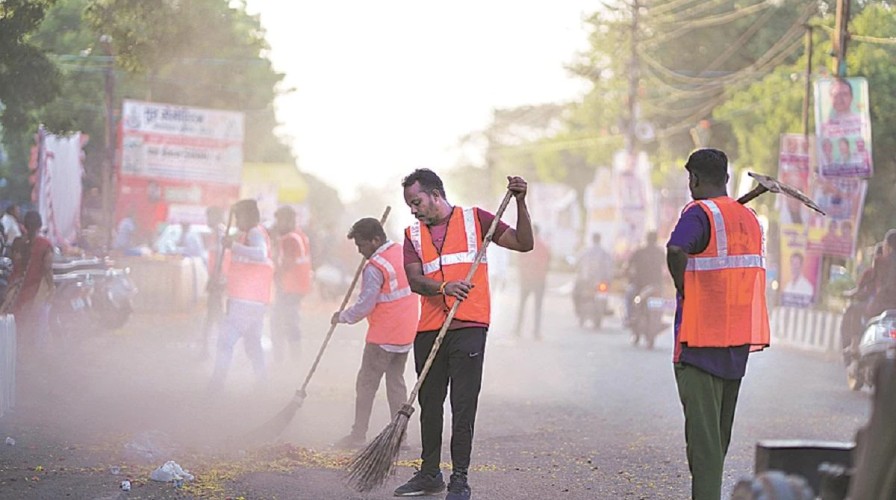
Under the Swachh Bharat Mission Grameen Phase II, approximately 83 per cent of India’s villages have been designated as Open Defecation Free Plus Model, which represents a major advancement in rural sanitation coverage by 2025. The Department of Drinking Water and Sanitation’s year-end review states that by mid-December, more than 4.89 lakh villages had been designated as ODF Plus Models. Over 4.15 lakh of these villages were confirmed to meet the required standards.
Sustained open defecation-free status, solid and liquid waste management systems, and aesthetically pleasing public areas are all necessary for the ODF Plus Model accreditation. Over 5.27 lakh villages throughout the country reported having solid waste management arrangements. In the meantime, liquid waste treatment systems had been put in place in more than 5.41 lakh villages. Plastic waste management plans were reportedly in place in more than 5,300 blocks. During the year, more than 970 community biogas units were in operation under the Galvanising Organic Bio-Agro Resources Dhan Scheme, or GOBARDhan project. According to the paper, these technologies helped produce organic manure and energy in rural regions while supporting decentralised waste treatment. Over 12 crore individual family latrines and over 2.67 lakh community sanitary complexes have been built in rural India since the mission’s inception in 2014.
By 2019, all people had access to sanitation, up from 39% in 2014. When Phase II was introduced in 2020, the emphasis moved to maintaining results and enhancing waste management services. One of the biggest rural sanitation initiatives in the world, the SBMG II was estimated to have cost over $17 billion in total. The Swachhata Hi Seva 2025 campaign, which ran from September 17 to October 2, increased citizen involvement. Over 18 crore people nationwide participated in the campaign. It was reported that more than 13 crore people participated from rural areas alone. The campaign’s main components were cleanliness campaigns, shramdaan events, and programmes for the welfare of sanitation workers. In addition, over 5,500 community sanitary complexes and over 1 lakh individual family toilets were repaired and beautified as a result of the Hamara Shauchalay, Hamara Bhavishya campaign.
In January 2025, the World Economic Forum in Davos featured India’s rural water, sanitation, and hygiene projects. India’s sanitation results, data systems, and connections to climate resilience were highlighted in the presentation. The WHO-UNICEF Joint Monitoring Programme also highlighted India’s advancements, pointing out that during the previous 20 years, 676 million individuals stopped defecating in the open. India’s monitoring of faecal sludge management through national databases that connect homes to treatment facilities was emphasised in the report.





Comments are closed