

With preventive healthcare gaining importance in early childhood development, Colgate-Palmolive (India) Limited is looking to expand the reach of its oral health education initiatives through its 2030 SMILE Strategy, which aims to reach more than 10 million children every year. The strategy builds on the company’s flagship Colgate Bright Smiles, Bright Futures® (BSBF) programme, which has been working to improve oral health awareness among children and families across India since 1991.
The next phase places emphasis on extending preventive health education through schools, Anganwadi centres and community networks, while strengthening partnerships with government institutions and local organisations. The approach recognises that oral hygiene habits are often established during childhood and that teachers, caregivers and families play an important role in reinforcing them.
Over more than three decades, BSBF has reached nearly 200 million children and their families across the country. Since 2023, the programme has engaged more than 25 million children across 17 states, covering approximately 70,000 schools in 480 cities. It has also provided tailored support to one million children with special needs.
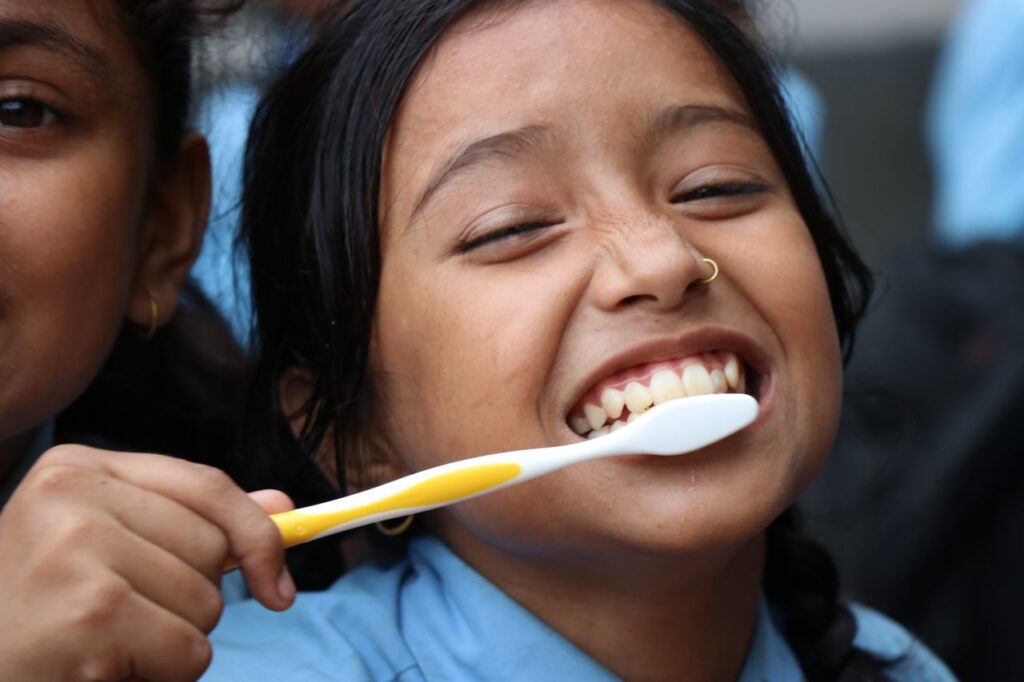
The programme uses interactive and age-appropriate learning activities to familiarise children with correct brushing practices, oral hygiene and preventive care. By encouraging children to share what they learn with parents and caregivers, it also seeks to extend health awareness beyond classrooms and into households.
Taking preventive health education to Anganwadi centres
An important part of the programme’s recent work has been its engagement with Anganwadi networks, which provide an established platform for reaching young children and their families. Through partnerships with state governments and community-based institutions, BSBF aims to integrate oral health awareness into existing early childhood care and education systems rather than relying only on standalone awareness campaigns.
During FY 2025–26, the initiative invested in capacity building for more than 4,000 Anganwadi workers in Uttar Pradesh and engaged 100,000 children aged three to six. Training frontline workers can help reinforce oral hygiene practices through regular interactions with children and caregivers, extending the programme’s influence beyond individual school sessions.
Colgate has also worked with government institutions, NGOs and dental organisations to expand the programme’s reach. Its partnerships with state-level systems are intended to make preventive oral health education more accessible across different communities and age groups.
Building towards the 2030 target

The newly introduced 2030 SMILE Strategy builds on Colgate-Palmolive India’s 2025 Sustainability and Social Impact Strategy. Its annual target of reaching more than 10 million children signals the company’s next phase of engagement, with an emphasis on expanding access, strengthening partnerships and sustaining preventive health education at the community level.
The scale of the existing programme provides a foundation for this expansion. However, achieving the 2030 ambition will also depend on the consistency of implementation, the capacity of frontline workers and the ability to translate awareness into everyday oral hygiene practices.
For CSR programmes focused on preventive healthcare, the challenge extends beyond reaching large numbers of beneficiaries. It lies in making health education part of children’s everyday environments, where families, schools and community institutions can reinforce healthy behaviours over time. Colgate’s next phase will be shaped by how effectively it builds on these networks to take oral health awareness to more children across India.




Comments are closed