

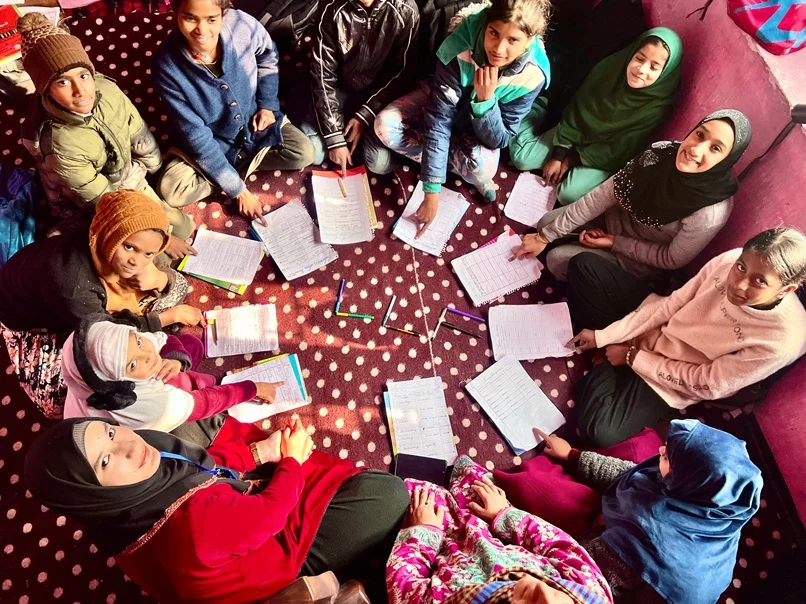
Ashok Leyland Foundation is expanding its impact in education by helping bridge learning gaps among children from underserved communities through its flagship CSR initiatives, Road to School and Road to Livelihood. Since their launch, the programmes have benefited more than 6.26 lakh students across 4,585 government schools in over 4,500 villages spanning nine states, creating opportunities for quality education and future employment.
Introduced in 2015, the Road to School initiative focuses on improving foundational literacy and numeracy while promoting health, hygiene, sports, arts, and creative learning among students from Grades 1 to 8. Recognising that education extends beyond academics, the programme also works to strengthen school participation, reduce dropout rates, and create engaging learning environments that encourage children to stay in school.
Building on this foundation, the Road to Livelihood programme was launched in 2022 to prepare students in Grades 9 to 12 for life after school. It equips young learners with practical skills such as digital literacy, spoken English, financial awareness, career guidance, life skills, and emotional well-being. These interventions are designed to help students make informed decisions about higher education, vocational training, or employment.
The Foundation’s education model integrates classroom learning with community engagement. Alongside academic support, it conducts health camps, awareness programmes, home visits, and outreach initiatives that encourage families and local communities to actively participate in children’s education. This collaborative approach helps improve school attendance while creating a supportive environment for long-term learning.
The programmes have delivered measurable outcomes over the years. More than 15,000 children have been brought back into the government school system, while 98% of participating students successfully transition to higher grades. Nearly 95% of Grade 10 students complete their schooling, and 85% of Grade 12 students pursue their preferred higher education pathways. Literacy and numeracy levels have also improved significantly, reflecting the effectiveness of the Foundation’s sustained interventions.
What started as a pilot project in 36 schools in Tamil Nadu’s Krishnagiri district has now evolved into one of India’s largest corporate-supported education initiatives. Implemented in partnership with Learning Links Foundation, state governments, and Samagra Shiksha Abhiyan, the programmes currently operate across 25 districts in states including Tamil Nadu, Uttar Pradesh, Rajasthan, Maharashtra, Andhra Pradesh, Assam, Meghalaya, Jharkhand, and Jammu & Kashmir.
Beyond student development, the Foundation also promotes community empowerment by supporting school infrastructure, strengthening School Management Committees, and facilitating access to government welfare schemes. In several regions, the initiatives have contributed to improved school performance, better parent participation, and stronger collaboration between schools and local communities.
Looking ahead, Ashok Leyland Foundation aims to extend its reach to one million students, reinforcing its commitment to inclusive education and sustainable social development. By combining quality learning with career readiness and community engagement, the Foundation continues to create pathways for children from disadvantaged backgrounds to achieve better educational and livelihood outcomes, demonstrating how corporate social responsibility can drive lasting social impact across India.







Comments are closed