


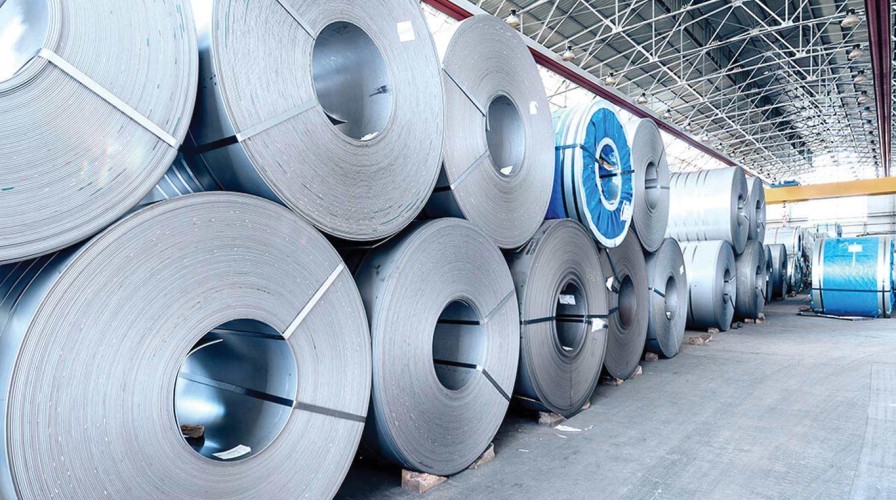
As the programme moves into its financial phase in 2026, the European Commission on Wednesday suggested steps to fortify the Carbon Border Adjustment Mechanism, or CBAM, with the goal of plugging gaps, preventing evasion, and safeguarding EU producers.
According to the commission, the suggestions aim to strengthen CBAM’s efficacy in tackling carbon leakage while advancing global decarbonisation and also address input from industry and international partners.
CBAM will broaden to include a few downstream goods that are heavily reliant on steel and aluminium as of January 1, 2026. The commission also intends to provide short-term assistance to safeguard EU producers who are at danger of carbon leakage. In order to align import costs with the EU Emissions Trading System, CBAM now applies to imports of basic goods such as steel, cement, aluminium, and power.
Importers will be required to pay a carbon price starting in 2026 that reflects the emissions associated with those items, simulating the costs incurred by EU producers under the EU ETS.
For EU businesses that utilise steel and aluminium in downstream production, the commission stated that this might result in higher input costs.
In order to guarantee that emissions decrease rather than move beyond the EU, the Carbon Border Adjustment Mechanism will be extended to 180 downstream products with a high steel and aluminium composition.
The commission estimates that industrial supply chain products with an average metal composition of 79% account for about 94% of the impacted commodities.
These products, which include base metal mountings, cylinders, industrial radiators, and casting machinery, are mostly utilised in heavy machinery and specialised equipment.
Approximately 6% of the covered downstream products are household goods. According to the Commission, CBAM-linked pricing may result in increased material costs for EU manufacturers of such goods. The commission suggested more robust measures to address circumvention risks found through stakeholder engagements and the Steel and Metal Action Plan, building on the lessons learnt during the transitional phase.
Pre-consumer steel and aluminium scrap will now be included in CBAM calculations, encouraging the use of scrap and guaranteeing equitable carbon pricing for both imported and EU-made goods.
In order to strengthen traceability and mitigate the risks associated with misreporting emissions intensity, the Carbon Border Adjustment Mechanism will also implement more stringent stating criteria.
The Commission stated that CBAM authorities may adopt country-level default values or demand more proof in situations where actual emissions data turns out to be untrustworthy. The commission announced a Temporary Decarbonisation Fund to assist EU manufacturers of CBAM products that are still vulnerable to carbon leakage in order to reduce competitiveness threats.
For qualifying commodities, the fund will partially compensate the carbon costs of the EU ETS; funding is dependent on proven decarbonisation activities. According to the commission, the goal of the policy is to keep cheaper and more emissions-intensive alternatives from displacing EU exports in third-country markets.
A quarter of the sales proceeds from CBAM certificates in 2026 and 2027 will be used by member nations to finance the fund. The remaining 75% will be a resource owned by the EU.






Comments are closed