


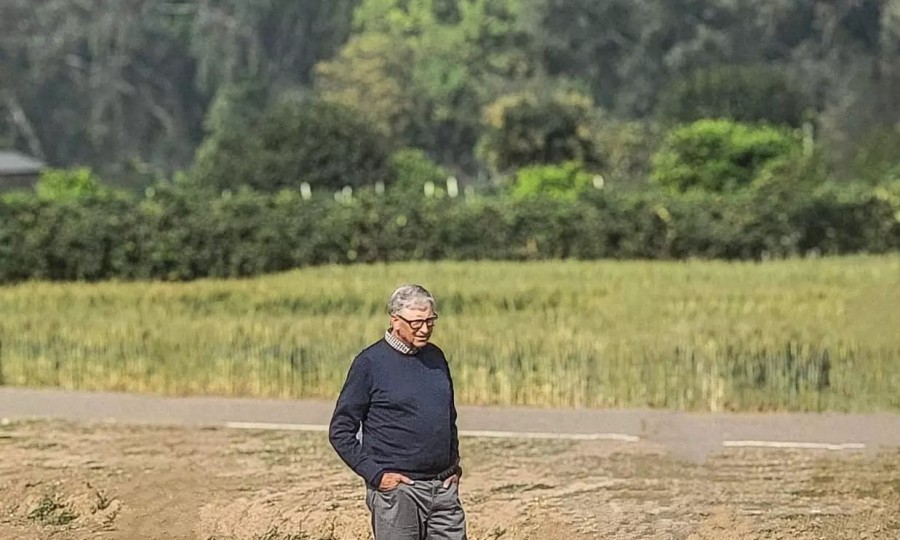
The Bill & Melinda Gates Foundation unveiled one of the biggest private investments in agricultural resilience on 7 November: a $1.4 billion, four-year commitment to assist smallholder farmers in South Asia and Africa in adapting to increasingly severe climate shocks.
The programme, which was unveiled at the COP30 climate meeting in Belém, would increase access to innovations that help farms cope with high temperatures, floods, and droughts.
Strengthening food security in areas where farming provides livelihoods but is still extremely vulnerable to climate change is the foundation’s mission. According to the organisation, such agricultural systems now get less than 1 per cent of global climate investment.
“Under the most difficult circumstances possible, smallholder farmers are providing food for their communities,” stated Bill Gates, chair of the foundation. “We’re giving them the resources and tools to support their ingenuity—because one of the best, most effective things we can do for people and the planet is to invest in their resilience.”
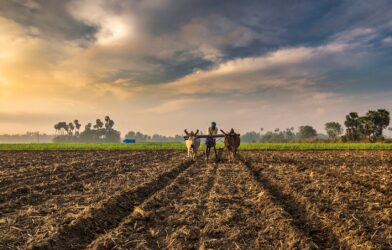
One-third of the world’s food supply is produced by farmers in low-income nations, but they are under increasing climate pressure that might undo decades of progress.
The foundation’s investment aims to close a long-standing adaptation financing gap that has left millions vulnerable to poverty and hunger brought on by climate change.
Targeted climate adaptation can increase GDP in vulnerable economies by up to 15 percentage points by 2050, according to World Bank research.
According to the World Resources Institute, within ten years, every dollar spent in adaptation generates more than $10 in social and economic benefits.
According to Mark Suzman, CEO of the Gates Foundation, “Climate adaptation is not just a development issue—it’s an economic and moral imperative.”” Our assistance for farmers who are already developing innovative solutions to endure extreme weather is strengthened by this new commitment. However, governments and the business sector need to collaborate in order to prioritise adaptation in addition to mitigation. The additional investment from the foundation will scale locally driven, evidence-based solutions that improve food systems and rural lives.
The funds will speed up technology that is already producing results, like digital advising platforms that give farmers real-time weather information and planting recommendations.
By 2030, these resources—which include the AIM for Scale initiative—are intended to reach 100 million farmers in Latin America, Asia, and Africa.
In order to sustain productivity and nutritional content, the foundation will also increase research and the use of climate-resilient crops and livestock that are developed to resist heat, drought, and new pests. Restoring soil through technologies that increase fertility, productivity, and carbon retention will be another major priority. Scientific advancements in this field will be supported by a $30 million agreement with the Novo Nordisk Foundation.
These measures respond to a serious warning from the Intergovernmental Panel on Climate Change, which estimates that if adaptation efforts are delayed, agricultural productivity in some parts of Africa may drop by as much as 20% by 2050. The foundation’s COP27 promises created or strengthened partnerships that are already helping millions of smallholder farmers become more climate resilient, and this new commitment builds on those collaborations.
During the 2025 monsoon season in India, the AIM for Scale programme sent text messages with AI-driven weather forecasts to about 40 million farmers, assisting them in safeguarding crops from unpredictable rains.
Together with Kenya’s Agricultural and Livestock Research Organisation, the TomorrowNow programme has provided hyper-local weather notifications to over 5 million farmers in East Africa. We are currently expanding to Tanzania, Malawi, and Zambia.
Wanjeri Mbugua, CEO of TomorrowNow, stated, “We’ve seen what’s possible when smallholder farmers have access to the right tools and resources—they adapt faster than anyone.” “With the correct funding and solid collaborations, we can directly deliver robust, data-driven solutions to farmers, enabling them to make wise choices and develop resilience at their own pace.”






Comments are closed