


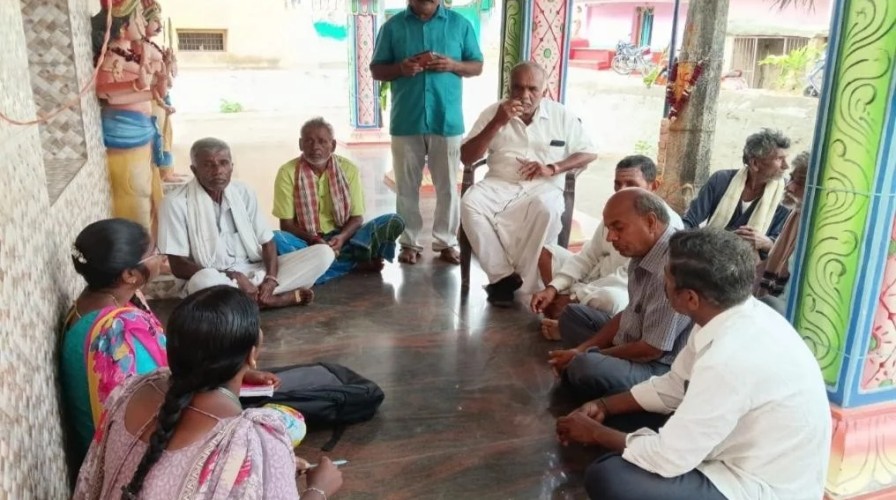
Under its flagship Jal Jeevan programme, the 110-year-old Hinduja Group’s charitable arm, the Hinduja Foundation, has introduced “Silt for Sustainable Farmland Enrichment”, a first-of-its-kind project in Tamil Nadu’s Krishnagiri area. With Ashok Leyland serving as the CSR partner, the initiative, which is being carried out by PRADAN (Professional Assistance for Development Action), has restored roughly 55 hectares of farmland, or more than 75 football fields, and lowered cultivation costs for more than 60 small and marginal farmers in the taluks of Shoolagiri, Hosur, and Denkanikottai.
Renowned for its horticulture and irrigation tanks, Krishnagiri has significant problems from deteriorating soil fertility and water constraints, particularly for small and marginal farmers. The programme, which combines innovation, environmental stewardship, and community empowerment, is a scalable model for sustainable agriculture and rural lives and is based on close cooperation with the government. Our goal at the Hinduja Foundation is to develop long-term solutions that give communities the strength they need to face the future. This project demonstrates our conviction that environmental stewardship and innovation in rural development can coexist. Raman Kalyanakrishnan, CEO of the Hinduja Foundation, stated, “We see this as the beginning of a model that can be scaled across regions to help more farmers thrive.”
The initiative rehabilitates tanks and channel networks, enriches farmlands with nutrient-rich silt, and desilts tank beds. In doing so, it boosts crop output, builds stronger local communities, and lessens reliance on artificial fertilisers. Restored soil fertility is anticipated to benefit approximately 730 farmers in ten villages, laying the groundwork for a scalable, state-wide paradigm for sustainable tank rehabilitation.
The programme involves increasing groundwater levels, increasing water storage, and strengthening climate resilience by organising communities to desilt tanks and create Tank Protection Committees. The project is transforming local issues into opportunities for large-scale regeneration, primarily benefiting small and marginal farmers growing vegetables and ragi. It establishes a standard for climate-resilient, scalable agriculture that can motivate comparable projects throughout India.







Comments are closed