


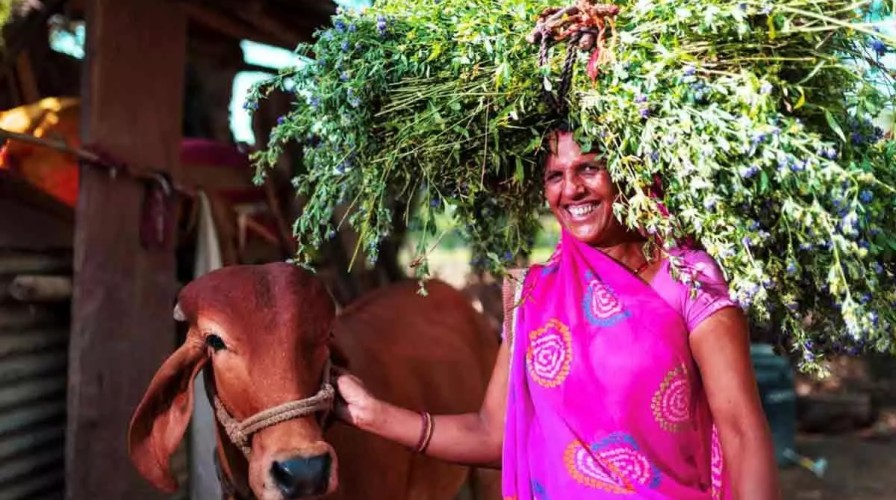
Through its Samadhan project, Hindustan Zinc Limited, the largest integrated zinc producer in the world, is spearheading a revolutionary attempt to change agricultural methods in Rajasthan as part of its corporate social responsibility programmes. Since its launch, the programme has impacted the lives of about 1.4 lakh farmers, generating over Rs 192 crore in diversified farm income in only the last 12 months.
Due to archaic methods, inadequate irrigation, and unorganised market access, Shankar Lal Dangi’s family managed to make ends meet on a meagre monthly revenue of Rs 6,000–7,000 when he started farming in Chota Guda hamlet, close to Udaipur, Rajasthan. He implemented drip irrigation and scientific farming methods and joined a farmer producer organisation that guaranteed fair pricing and market access with the help of Hindustan Zinc Limited’s flagship Agri-livelihood programme, Samadhan. His household now enjoys financial security, self-assurance, and dignity, as his agricultural output has greatly increased, milk production has more than doubled, and his yearly income has increased. Shankar Lal’s path exemplifies the larger shift that Samadhan is facilitating in rural Rajasthan, assisting farmers in transitioning from subsistence farming to sustainable agri-entrepreneurship.
The Samadhan initiative, which focuses on farm-based interventions, is intended to assist local farmers in adopting sustainable agricultural practices, increasing production, and lowering labour intensity. Over the past year, this programme has produced quantifiable results through a multifaceted approach that includes agricultural diversification, dairy growth, livestock asset building, microenterprise promotion, and farmer-owned institutions. These include the creation of livestock assets worth over ₹90 crore, more than 280 lakh litres of milk valued at over Rs 88 crore, more than Rs 13 crore from five Individual Farmer Producer Organisations, and nearly Rs 7 crore from farmer-led microenterprises like Gauam that produce mineral mixtures and dairy-based FMCG products.
A comparable transformation tale comes from Sindesar Kalan hamlet in Rajasthan’s Rajsamand region, where Dinesh Puri Goswami, with Samadhan’s help, went from low-return traditional farming to varied vegetable gardening and better dairy techniques. Through the implementation of scientific pest management, raised-bed nurseries, and animal breed development, Dinesh was able to double his monthly milk income to Rs 12,000 and produce Rs 78,000 from vegetable cultivation in just four months. For his family, having a variety of revenue streams has greatly decreased risk and increased financial security.
The establishment of robust grassroots institutions and farmer ownership are essential components of Samadhan’s success. In order to facilitate aggregation, guaranteed market access, and long-term sustainability, the programme has mobilised 510 Farmer Interest Groups and five Individual Farmer Producer Organisations, totalling over 9,300 farmer-shareholders. By adapting climate-smart agriculture practices like POP, small plot, high-tech vegetable cultivation, precision irrigation, trellis farming, scientific dairy management, medicinal crops, WADI, and bio-fortified crops like zinc and iron-enriched wheat, Samadhan has covered 2,449 hectares of land. This has improved productivity, improved nutrition outcomes, and increased incomes. Along the way, female farmers are also becoming change agents. Their involvement is boosting household prosperity and community resilience through anything from dairy entrepreneurship to horticulture and leadership positions within FIGs. For example, Gendi Bai from Ganeshpura vil
Beyond Samadhan, the social impact strategy of Hindustan Zinc, a Vedanta Group firm, is based on creating resilient communities via a long-term, integrated approach to development. In addition to enhancing local institutions and infrastructure in the areas where it operates, the company works in the areas of education, healthcare, women’s empowerment, skill development, sustainable livelihoods, sports, and environmental stewardship. Hindustan Zinc currently affects the lives of about 23 lakh people in more than 2,300 villages through a combination of partnerships, scalable approaches, and community-led initiatives, including Nand Ghar, Sakhi, Zinc Kaushal, and Samadhan. In keeping with national development priorities and the Viksit Bharat vision, the company, one of India’s top contributors to CSR, keeps promoting inclusive growth, social equity, and grassroots capacity-building.




Comments are closed