


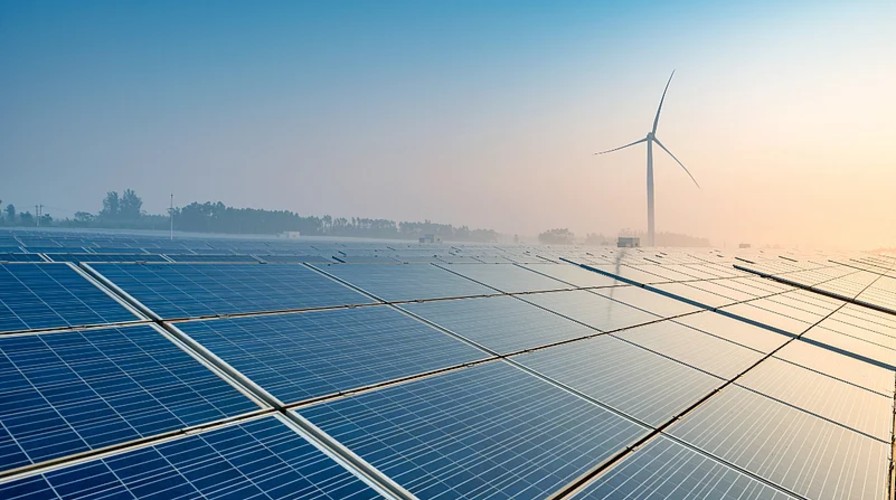
With solar power driving the biggest increase in the nation’s energy transformation, India built a record 44.51 gigawatts of renewable energy capacity in 2025 through November, almost double yearly additions from a year earlier. According to government figures, total renewable capacity increased to 253.96 GW by November 2025 from 205.52 GW the previous year, the largest annual rise ever. At 262.74 GW, non-fossil capacity—which includes nuclear and big hydro—accounted for 51.55 per cent of India’s 509.64 GW installed power capacity.
The achievement increases the government’s target of 500 GW of non-fossil capacity by 2030, which was stated at the United Nations Climate Change Conference in Glasgow, Scotland, in 2021. In June 2025, five years before it was supposed to, India also achieved 50% of its total installed capacity from non-fossil sources. With 34.98 GW installed from 2025 to November, solar power dominated the growth, up from 20.85 GW over the same period the previous year. The installed solar capacity increased from 94.17 GW in November 2024 to 132.85 GW.
In January 2025, India achieved the 100 GW solar milestone. Additionally, during the year, government agencies added roughly 2.87 GW under the Central Public Sector Undertaking Scheme Phase II, while solar parks put about 3.08 GW of installations into service.
Additionally, wind power increased steadily. Through November, capacity increases were 5.82 GW, up from 3.2 GW in the previous year. After surpassing 50 GW in March 2025, installed wind capacity increased to 53.99 GW.
According to a power ministry release, on July 29, renewables provided 51.5% of India’s 203 GW of total electricity demand, the largest day percentage ever. India increased its own manufacturing as well. Under the approved manufacturers list, indigenous solar module manufacturing capacity reached approximately 144 GW annually, with an additional 81 GW added in 2025 alone, nearly tripling increases from 2024.
About 24 GW of solar cells could be produced under a different approved list. Throughout the year, recipients of the production-linked incentive programme installed roughly 5 GW of cell capacity and 11 GW of module capacity.
The government lowered the goods and services tax on a number of solar gadgets and components from 12 per cent to 5 per cent in September. Additionally, it announced new quality criteria for storage batteries, inverters, and solar modules.
Throughout the year, updated approved manufacturer lists and revised standards were released for wind, which tightened component criteria and required domestic data centres for turbine models. Deployment was boosted by flagship programmes. Over 1.81 million homes benefited from the installation of nearly 1.44 million rooftop solar systems under the PM Surya Ghar: Muft Bijli Yojana between January and December 2022.
Strong progress was also made with the Pradhan Mantri Kisan Urja Suraksha evam Utthaan Mahabhiyan plan, or PM-KUSUM. Component A had approximately 667 MW of solar power installed by November 30. Other components included the deployment of roughly 1.1 million grid-connected pumps and over 942,000 independent solar pumps.
In total, PM-KUSUM installed 10,203 MW of solar power, of which roughly 64% was added in 2025. Approximately $326 million has been spent so far this year.








Comments are closed