


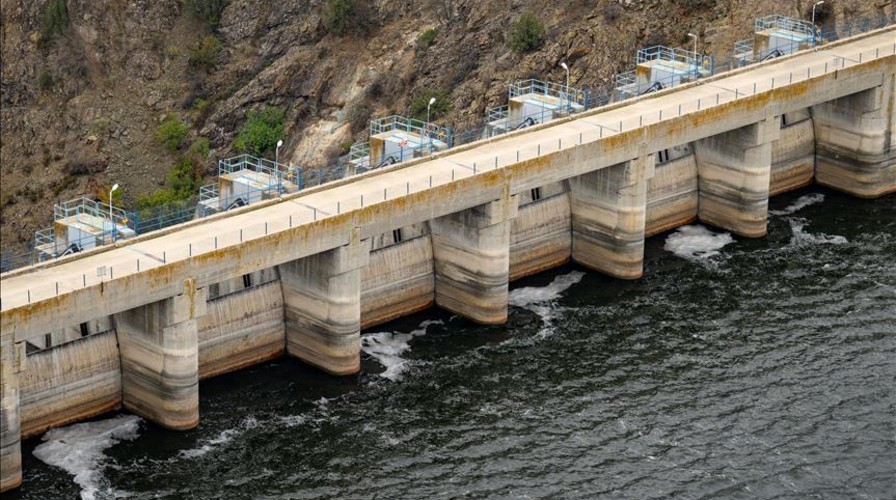
According to a report by an international media agency, which cited the Central Electricity Authority (CEA), India has revealed a ₹6.4 trillion ($77 billion) plan to generate and transport over 76 gigawatts of hydroelectric capacity from the Brahmaputra basin by 2047. The initiative seeks to address India’s increasing need for electricity while bolstering its energy security. According to the CEA assessment, it includes 208 big hydropower projects spread over 12 sub-basins in the northeastern states, adding 11.1 GW from pumped-storage projects to the total potential capacity of 64.9 GW.
The Brahmaputra basin is still one of India’s most important yet underutilised energy areas, according to a media outlet. After starting as the Yarlung Zangbo in Tibet, the Brahmaputra River travels through Bangladesh and India before emptying into the Bay of Bengal. India’s hydro plans gain a geopolitical dimension due to theirir transboundary nature. India considers dam building and water management in the basin to be strategically sensitive, according to Reuters. Authorities worry that up to 85% of the dry-season flows into India may be cut off by Ch—Arunachal Pradesh, Assam, Sikkim, Mizoram, Meghalaya, Manipur, Nagaland, and West Bengal—will be involved in the projects. These states collectively possess more than 80 per cent of India’s unexplored hydropower potential.
According to the CEA, NHPC Ltd, NEEPCO, and SJVN are among the central public sector utilities that will oversee project execution. According to the agency, some hydroelectric projects are already in the planning stages. The strategy also intends to improve transmission infrastructure throughout India’s expanding energy grid by increasing the production of renewable energy in the northeast.








Comments are closed