


In an effort to increase the employment of people with disabilities (PwD) in the industrial sector, Godrej Consumer Products Ltd. (GCPL) and Atypical Advantage introduced “Work That Includes” on Wednesday. It is advertised as India’s first employability toolbox.
In order to promote disability inclusion in factories and production units, industry leaders, legislators, and inclusion advocates convened in Mumbai for the EmployAbility in Manufacturing Summit 2025, where the launch was conducted.
Over 30 million people are employed in the manufacturing sector, according to industry estimates, but PwD involvement in the private sector is still low at 36%, whereas that of the non-disabled workforce is close to 60%. The goal of the summit was to change the focus of the discussion from “why inclusion” to “how inclusion can be implemented successfully”.
Integrative Solutions created the toolkit, which offers detailed instructions on task mapping, accessibility audits, workflow redesigns, Indian Sign Language (ISL) glossaries, and case studies from industries like semiconductors, FMCG, and autos. Ira Singhal, an IAS officer and disability rights champion, was present when the handbook was launched.
According to Vineet Saraiwala, founder of Atypical Advantage, “India’s official disability figure of 2.21 per cent understates the extent of under-representation.” “Due to outdated procedures and presumptions about productivity and safety, manufacturing has been one of the industries that has adopted disability inclusion the slowest.”
According to Saraiwala, businesses such as GCPL have demonstrated that inclusive employment in the manufacturing sector is both useful and beneficial. “Inclusion is not only feasible but also extremely beneficial for businesses, communities, and the nation with the correct systems and mindset,” he continued.
GCPL, Nestlé, Micron, Tata Motors, Arabil Solutions, and NIVEA have all reported increases in productivity, retention, and shop-floor discipline as a result of Atypical Advantage’s facilitation of PwD hiring over the previous five years.
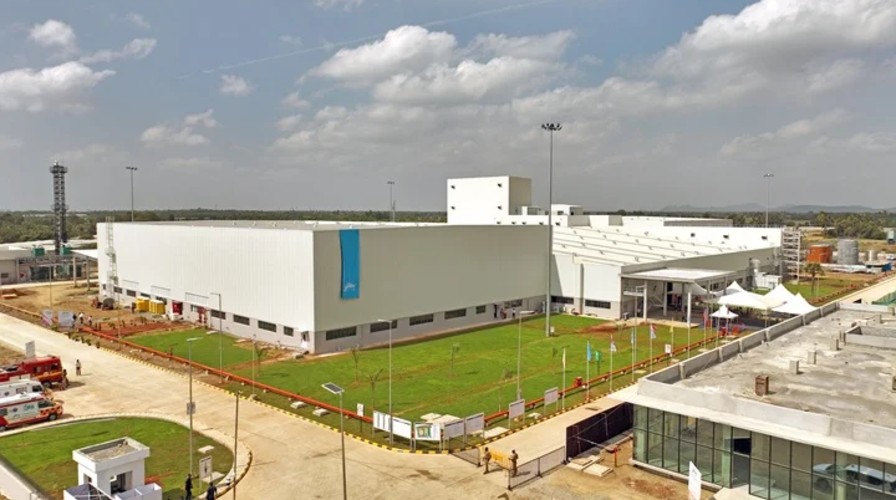
The manufacturing facilities of GCPL in Chengalpattu, Tamil Nadu, and Malanpur, Madhya Pradesh, have become national models of inclusive and accessible workplaces. To incorporate PwD into industrial operations, the company has used job mapping, infrastructure upgrades, ISL resources, and technical training.
“GCPL is committed to driving meaningful change at a time when disability employment remains far below potential,” stated Vaibhav Ram, Global Head of HR at GCPL. “We intend to expand into additional roles and locations, and we currently employ over 20 people with disabilities across our factories.”
According to Ram, the new toolbox gives businesses a solid foundation. “Empathy and productivity can coexist.” He said that GCPL is strengthening long-term capability building by integrating disability awareness and ISL modules into its Learning Management System. “Accessible workplaces help build stronger, more resilient teams,” he said.
According to GCPL and Atypical Advantage, the toolkit reaffirms that inclusive manufacturing is a strategic corporate advantage rather than a CSR gesture. Disability inclusion is a major economic opportunity as well as a social obligation as India increases its manufacturing footprint.



Comments are closed