


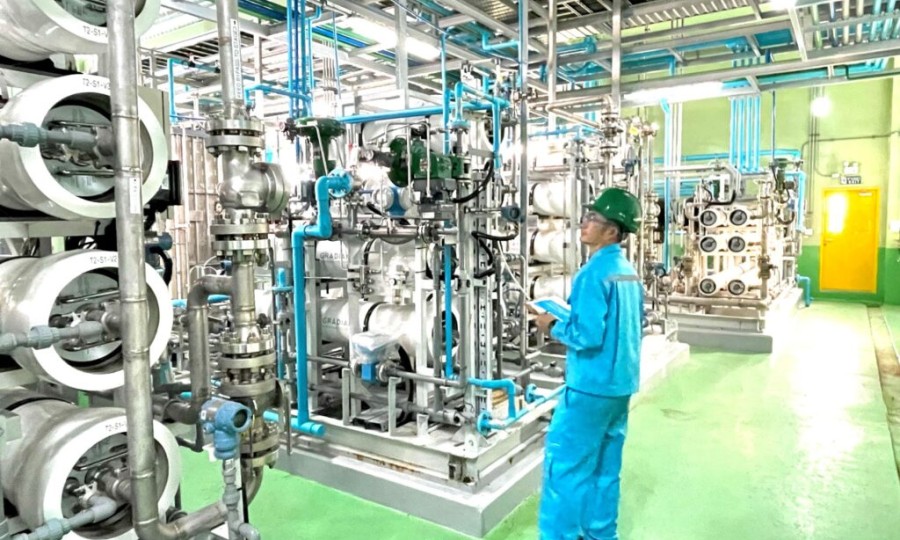
According to a recent ICRA ESG assessment, nearly three-fourths of India’s leading textile industries have implemented zero liquid discharge systems, signalling a dramatic change in water stewardship as the sector comes under increased scrutiny for resource management.
ZLD is a wastewater treatment method that leaves only solid waste left after recovering and recycling almost all of the water, reducing the environmental impact.
According to the report, integrated mills that manage several stages—such as spinning, weaving, and finishing—led the push, with 86% of them disclosing water management operations through ZLD. Yarn and fabric came in second at 71%, and apparel at 60%. This indicates how circular water practices are now influencing sustainability decisions throughout the industry.
In the research “Sustainability Unstitched”, top-listed manufacturers with market capitalisations ranging from ₹2,730 crore ($324 million) to ₹53,756 crore were investigated for their sustainability performance.
As more businesses use ZLD and grow their reuse systems, it was discovered that water stewardship in textiles is getting stronger. However, freshwater withdrawal in water-intensive manufacturing centres is still quite significant. Companies are starting to shut loops throughout dyeing, bleaching, and finishing operations, according to the data, despite this. Between fiscal 2023 and 2025, the adoption of renewable energy in textiles increased significantly across all categories, despite the fact that water remained a major pressure point. The proportion of renewable energy in the sector increased from 14% to nearly 18%.
The largest RE penetration was reported by apparel manufacturers, whilst the quickest growth, 167 per cent, was recorded by yarn and fabric companies. The percentage of integrated mills increased from 17% to 21%.
Nonetheless, pollutants from the textile industry continued to be monitored upstream. Over a three-year period, textile manufacturing’s energy intensity increased by 6 to 8%. The apparel industry increased by 28%. Fabric and yarn increased by 8.5%.
Integrated mills reported a slight rise of 6%. These changes show that, despite the growth of cleaner energy sources, energy demand is still linked to spinning, weaving, and wet processing.
Upstream-heavy parts saw a decrease in carbon emission intensity. Emissions from fabric and yarn decreased by 8%. Integrated mills reduce emissions by roughly 5%. Because of increased production volumes and high-end garment finishing, apparel emissions increased by 12%.
In the report, Sheetal Sharad, Chief Ratings Officer, ICRA ESG Ratings, stated, “Carbon emissions intensity improved for ICRA ESG’s sample set, highlighting efficiency gains and process optimisation across operations.”
According to Sharad, structural advancement is indicated by the industry’s decarbonisation. “A gradual shift towards cleaner fuels, process optimisation, and improvements in energy efficiency have led to a decline in emission intensity across the industry,” Sharad continued.
“While others need to accelerate ESG governance and Scope 3 reporting to meet global sustainability standards, this reflects stronger strategic alignment among integrated firms,” she added.






Comments are closed