


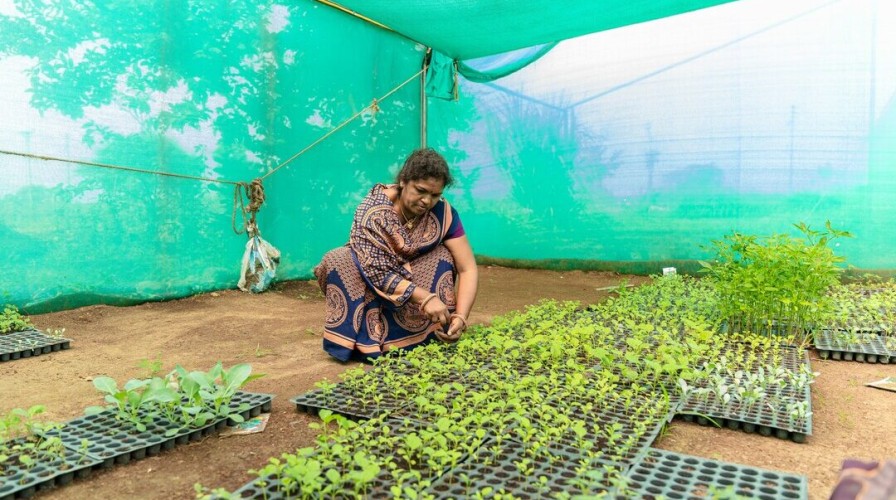
The environment ministry announced recently that India has extended the Nagar Van Yojana as a key component of its national push for green cities, increasing urban greening through community forests, school nurseries, and mass planting activities.
In a written response to the Lok Sabha, Minister of State Kirti Vardhan Singh stated that the Ministry of Environment, Forests, and Climate Change has placed the Nagar Van Yojana at the centre of its broader public engagement plan for cleaner towns and green cities.
In his written response to Parliament, Singh stated, “Community-driven action remains the foundation of our efforts to promote cleaner and greener cities and towns across the country.” The government has created 620 urban and peri-urban forests in 28 states and three union territories as part of the Nagar Van Yojana. By turning unused land into dense green areas inside rapidly expanding cities, the plan enhances urban greening.
Since 2020–21, the government has disbursed around ₹50,784.64 crore ($5.64 billion) through the Nagar Van Yojana. The money goes towards long-term upkeep, fencing, soil enhancement, and plantations.
In order to actively connect kids with urban greening initiatives, the School Nursery Yojana was given around ₹7.38 crore at the same time. Accredited public and private schools host the programme. It teaches children about plant conservation and how to raise saplings.
According to Singh, the goal of both programmes is to instil environmental responsibility locally. According to him, they also use persistent urban greening to increase resilience at the city level. On World Environment Day 2024, the government started the “Ek Ped Maa Ke Naam” campaign. In order to increase green cover and fortify green cities across the country, the initiative takes a whole-of-government and whole-of-society strategy.
On the MeriLife portal, state forest departments and affiliated ministries have documented the planting of almost 261 crore saplings. In urban areas, around 45 crore seedlings were planted.
According to Singh, the findings demonstrate how citizen involvement can hasten urban greening and contribute to the development of sustainable green cities.
In response, he stated, “These campaigns demonstrate how citizens, institutions, and government can work together to restore nature and improve living spaces.” The Swachhata Pakhwada and Swachhata Hi Seva initiatives include cleanliness drives at the National Museum of Natural History in New Delhi and its regional centres. These programmes include trash segregation, street performances, art contests, movie screenings, and nature walks.
The ministry has also arranged outreach initiatives, workshops, and green discussion sessions nationwide under Mission LiFE. This year, there have been three Mission LiFE initiatives across the country.
By encouraging recycling, trash reduction, and sustainable living, the initiatives seek to change everyday behaviour in favour of green cities.







Comments are closed