


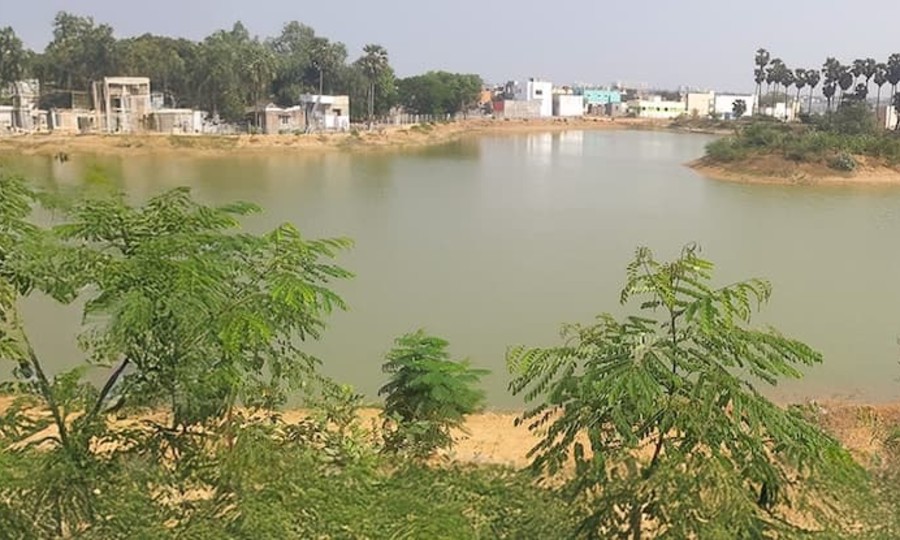
In collaboration with Pitchandikulam Forest, a prominent global communications technology company, Tata Communications has effectively converted Nagan Thangal Lake in Upparapalayam village, Pothur Panchayat, Tamil Nadu, into a flourishing natural resource and communal asset.
According to a recent assessment by the Watershed Organisation Trust Centre for Resilience Studies (W-CReS), a preeminent centre for applied, transdisciplinary research that connects science, policy, and practice to build climate and community resilience, the initiative has resulted in notable improvements in water security, biodiversity, and community engagement.
Groundwater levels, flow patterns, catchment capacity, geophysical surveys, geological mapping, water quality, and aquifer features were all thoroughly examined in the WOTR study, which was commissioned by Tata Communications. The study also demonstrated “what a well-planned restoration effort can achieve when aligned with catchment hydrology and local community engagement.”
Previously, the Nagan Thangal Lake was an essential source of water for around 2,800 people. During the monsoon season, it was also a vital body of water for water transportation and preventing urban flooding. However, years of pollution, siltation, and neglect have deteriorated the surrounding ecology and drastically decreased its capacity by over 75%. The once-thriving natural resource was now a sluggish body of water that could no longer support the demands of the town. In response, Tata Communications launched the restoration initiative Nanneer in 2022 (the word “nan” in Tamil means “good” and “neer” means “water”) in an effort to revitalise the lake. The project’s name, Nanneer, perfectly encapsulates its goal of restoring clean water.
Platforms, an island, and two small hills with walking trails were all part of the well-thought-out land shape strategy created for the 15.01-acre lake. During the land-shaping phase, four acres of the lake had to be carefully excavated and desilted to a depth of 1.5 metres. The lake’s ecology was revitalised by using the dirt and silt that had been dug up to form hills, islands, and bunds. The desilted lake area’s bunds, platforms, island, and hills were carefully planted with more than 4,000 natural species. The lake’s yearly groundwater recharge and water storage capacity have both grown dramatically as a result of the rejuvenation activities, according to the W-CReS research. Additionally, by improving vegetation, these have had a positive impact on land use patterns.
Groundwater recharge, animal drinking water supplies, sporadic fishing, and community recreation have all greatly improved as a result of the restoration, improving the lives of about 12,000 people, 60% of whom come from marginalised areas. Low to moderate levels of contamination are also shown by microbiological water quality indicators, highlighting the necessity of continued community education and treatment programmes.
Students from more than a dozen local schools can also take advantage of experiential learning opportunities at the revitalised lake. Constructed next to the lake, the learning centre is a community-led ecological education and outreach hub that encourages local stewardship and offers nature-based learning activities for kids and families.
The study highlights the significance of data-driven initiatives, frequent monitoring, and climate-resilient water governance in maintaining these gains, especially as urbanisation in Chennai’s peri-urban areas continues to increase.
Tata Communications will keep an eye on local biodiversity and bolster community involvement initiatives as part of the project’s next steps and long-term viability.






Comments are closed