


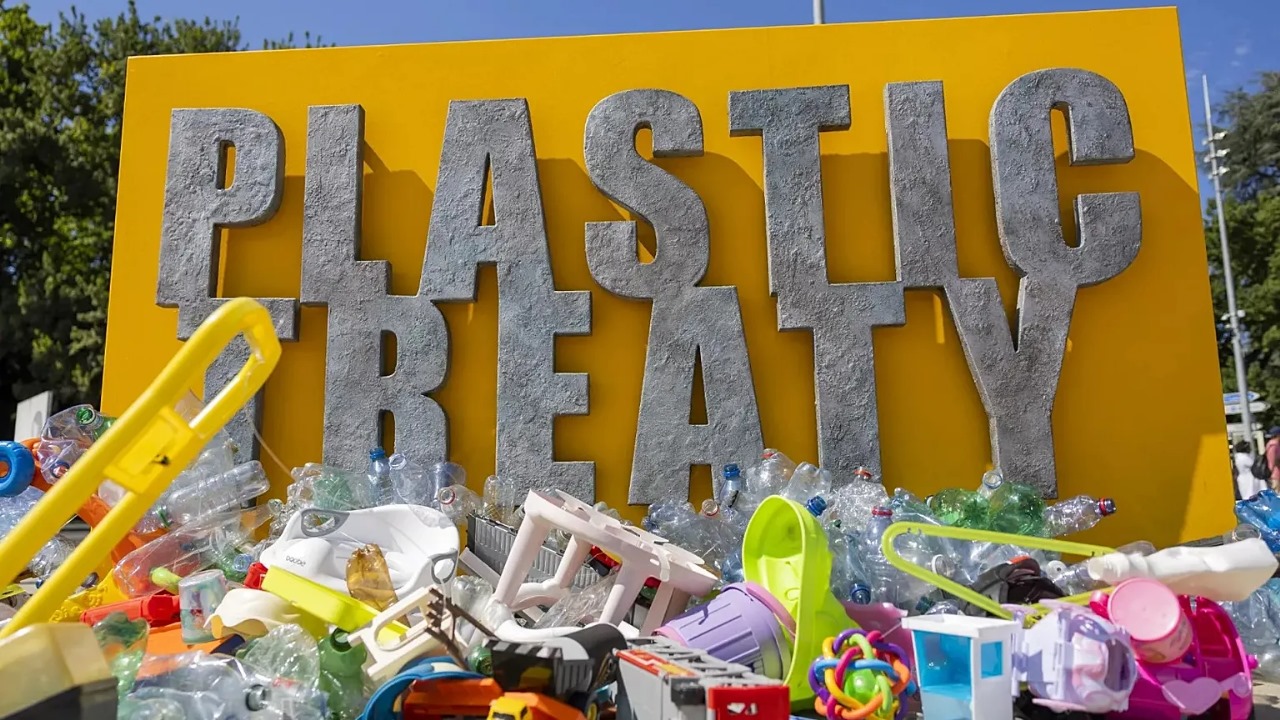
The failure of a sixth round of U.N. negotiations to reduce plastic production on August 15 has lowered expectations for addressing a major source of pollution and made many proponents of limitations doubt that a worldwide agreement will be reached during the Trump administration. According to participants, a three-year international effort to secure a legally enforceable agreement to reduce the amount of plastic pollution that is choking the oceans and endangering human health currently seems to be in a stalemate.
Numerous governments and activists attributed the failure to oil producers, especially the US, which they claimed solidified long-standing stances and persuaded others to oppose restrictions on new plastic manufacture that would have reduced polymer output. The United States, the world’s second-largest manufacturer of plastics behind China, was less receptive than in earlier rounds of negotiations under Joe Biden’s administration, according to Debbra Cisneros, a negotiator for Panama, which backed a robust deal, who spoke to Reuters.
They simply didn’t want anything this time. “We always had them against us in every significant provision, so it was difficult,” she stated at the conclusion of the 11-day negotiations. When President Donald Trump issued an executive order in February urging customers to purchase plastic drinking straws, anti-plastic activists saw little chance of a shift in Washington’s stance. Bjorn Beeler, International Coordinator at the International Pollutants Elimination Network (IPEN), a global network of more than 600 public interest NGOs, stated, “The mindset is different, and they want to extract more oil and gas out of the ground.”
The U.S. delegation pressed for “common-sense and pragmatic approaches” during negotiations to minimise plastic pollution while still safeguarding American companies that depend on plastic, according to a statement from the U.S. State Department. In the U.S. economy and globally, it stated, “We did not support prescriptive top-down regulatory approaches that will stifle innovation and drive consumer inflation.” John Thompson, the U.S. delegate, refused to comment when a Reuters reporter asked him about the result.
Washington has voiced fears that the new regulations may raise the price of all plastic products, while a State Department official previously stated that each country should take action based on its national context. Additionally, the Trump administration has reversed a number of U.S. environmental and climate rules that it claims burden American industry excessively. Washington also showed its strength in negotiations for another international environmental deal earlier this week when it threatened to take action against states that supported a plan to cut shipping emissions.
Limits on plastic output are crucial for a group of over 100 nations hoping to reach a comprehensive agreement in Geneva. Sivendra Michael, the delegate from Fiji, compared skipping this clause to “mopping the floor without turning off the tap.” The World Wildlife Fund (WWF) reported that around a million tonnes of plastic garbage, some of which ends up on island state beaches, amass for every month of delays.







Comments are closed