


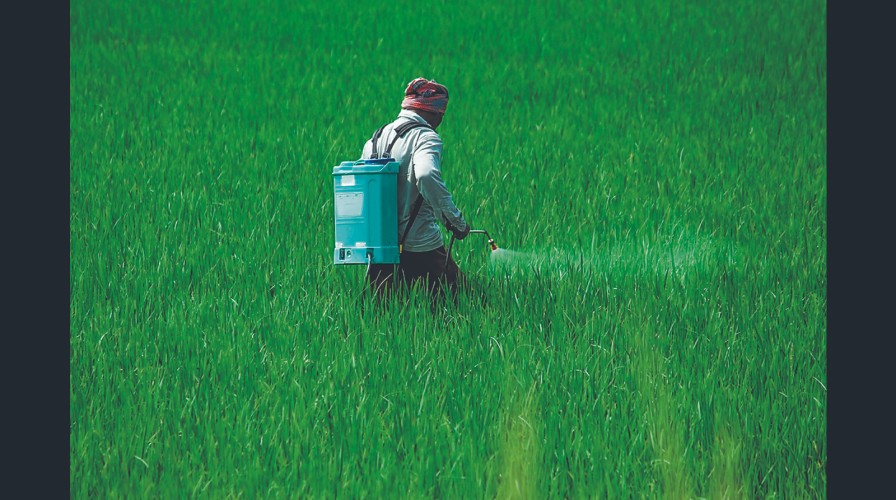
Authorised by the Uttar Pradesh government’s Department of Agriculture, IIT Roorkee is launching a groundbreaking initiative that will allow farmers to receive direct revenue in the form of carbon credits that have been scientifically validated. The program will implement Digital Monitoring, Reporting, and Verification (DMRV) systems that are globally aligned. Verified carbon credits will be created by scientifically measuring and converting increases in soil carbon and decreases in greenhouse emissions at the farm level brought about by techniques like limited tillage, cover crops, residue management, agroforestry, and enhanced use of biofertiliser. Farmers’ bank accounts will receive the proceeds from the selling of these credits.
The Saharanpur Division, which has a high potential to produce significant amounts of carbon credits each year, will be the starting point for the initiative. Additionally, IIT Roorkee will facilitate links between global purchasers, carbon markets, and farmers. The programme provides businesses with access to high-quality, transparently measured, and scientifically validated carbon credits, promoting Net Zero pledges and bolstering rural livelihoods and regenerative agriculture.
“This initiative gives farmers a meaningful stake in climate action by ensuring that their sustainable practices translate into real and measurable income,” stated Prof. K.K. Pant, Director of IIT Roorkee. IIT Roorkee seeks to empower farming communities, improve their resilience, and generate new economic opportunities through agriculture-based carbon credits by fusing scientific rigour with realistic, ground-level implementation.
“Every tonne of carbon stored in the soil is measured, verified, and monetised thanks to our scientific framework,” stated Prof. A.S. Maurya, Principal Investigator, IIT Roorkee. This programme aims to improve soil health, lower farm input prices, and generate new revenue streams for millions of farmers in addition to carbon credits.
“The state government welcomes IIT Roorkee’s leadership in this transformative programme,” stated Ravinder, Principal Secretary (Agriculture), Government of Uttar Pradesh. Through this collaboration, farmers will be able to directly profit from sustainable practices while supporting India’s climate obligations. This program’s large-scale sustainable practices are set to debut shortly.







Comments are closed