


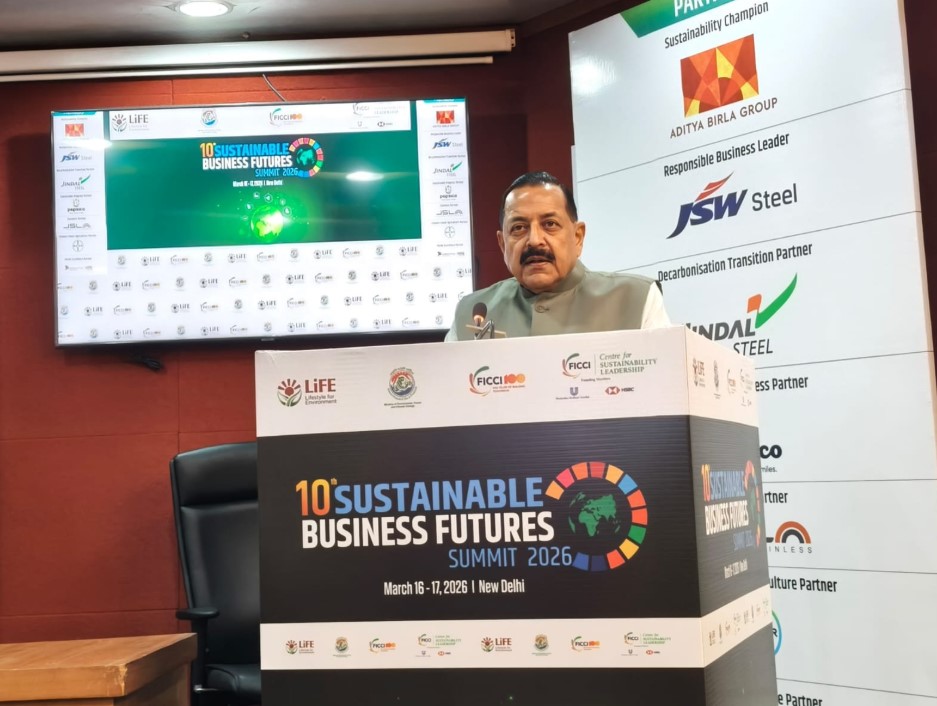
Union Minister Dr. Jitendra Singh has stressed that developing a strong green economy is crucial for achieving long-term environmental stability and sustainable economic growth. Addressing the 10th Sustainable Business Future Summit in New Delhi, the minister highlighted the need for India to accelerate its transition towards green infrastructure through innovation-driven and energy-focused solutions.
Dr. Singh stated that the shift towards a greener economy is no longer an option but a necessity in the face of global environmental challenges and changing economic priorities. He noted that sustainable development must be supported by modern infrastructure, advanced technologies, and efficient resource management systems to ensure lasting benefits for future generations.
Emphasizing the importance of collaboration, the minister said that both the government and private sector must work together to drive innovation in energy systems. According to him, efforts should focus on next-generation energy solutions, energy storage technologies, and improved grid management systems. Such measures are essential for strengthening energy security while supporting the country’s climate goals.
The minister pointed out that emerging technologies are playing a transformative role in shaping India’s sustainable future. Innovations in clean energy, sustainable urban planning, and smart resource management are helping reduce carbon emissions while enhancing the efficiency of infrastructure projects. These technologies, he said, are creating opportunities for economic growth without compromising environmental sustainability.
Dr. Singh observed that the global economy is undergoing a significant transformation. Traditional manufacturing models are gradually giving way to regenerative, recycling-based, and environmentally sustainable production systems. This shift reflects a growing international commitment to balancing economic development with ecological responsibility. He noted that countries worldwide are increasingly prioritizing green practices and sustainable industrial processes.
Highlighting India’s role in this evolving landscape, the minister said the country must align itself with international sustainability standards, strategies, and benchmarks. Such alignment will help India remain competitive in the global economy while contributing effectively to international climate and environmental goals. He added that adopting globally accepted sustainable practices will strengthen the nation’s economic resilience and attract future investments.
The minister also underscored that climate considerations have become an integral part of India’s infrastructure planning and development strategy. Across sectors, policymakers are increasingly incorporating sustainability objectives into long-term development plans. This integrated approach aims to create infrastructure that is environmentally responsible, economically viable, and socially beneficial.
Dr. Singh highlighted several key areas driving India’s green transition, including the expansion of renewable energy capacity, development of green hydrogen technologies, electrification of transportation systems, and sustainable water management initiatives. These efforts are expected to reduce dependence on fossil fuels, lower carbon emissions, and support cleaner economic growth.
He concluded by emphasizing that a strong green economy can serve as the foundation for a sustainable and prosperous future. By embracing innovation, promoting clean technologies, and encouraging collaborative action, India can achieve its development aspirations while safeguarding environmental resources for generations to come.
Follow CSR ESG Impact on LinkedIn & Instagram







Comments are closed