


India’s renewable energy sector is entering a transformative phase, driven by supportive government policies, rising investments, technological advancements, and growing demand for clean power. As the country works towards its ambitious climate and energy security goals, renewable energy is expected to play a central role in reshaping the nation’s power landscape over the coming years.
The country has already established itself as one of the world’s fastest-growing renewable energy markets. With strong momentum in solar and wind power installations, India is steadily progressing towards its target of achieving 500 GW of non-fossil fuel power capacity by 2030. Recent policy initiatives and regulatory reforms are encouraging greater participation from both domestic and international investors, creating a favourable environment for large-scale clean energy projects.
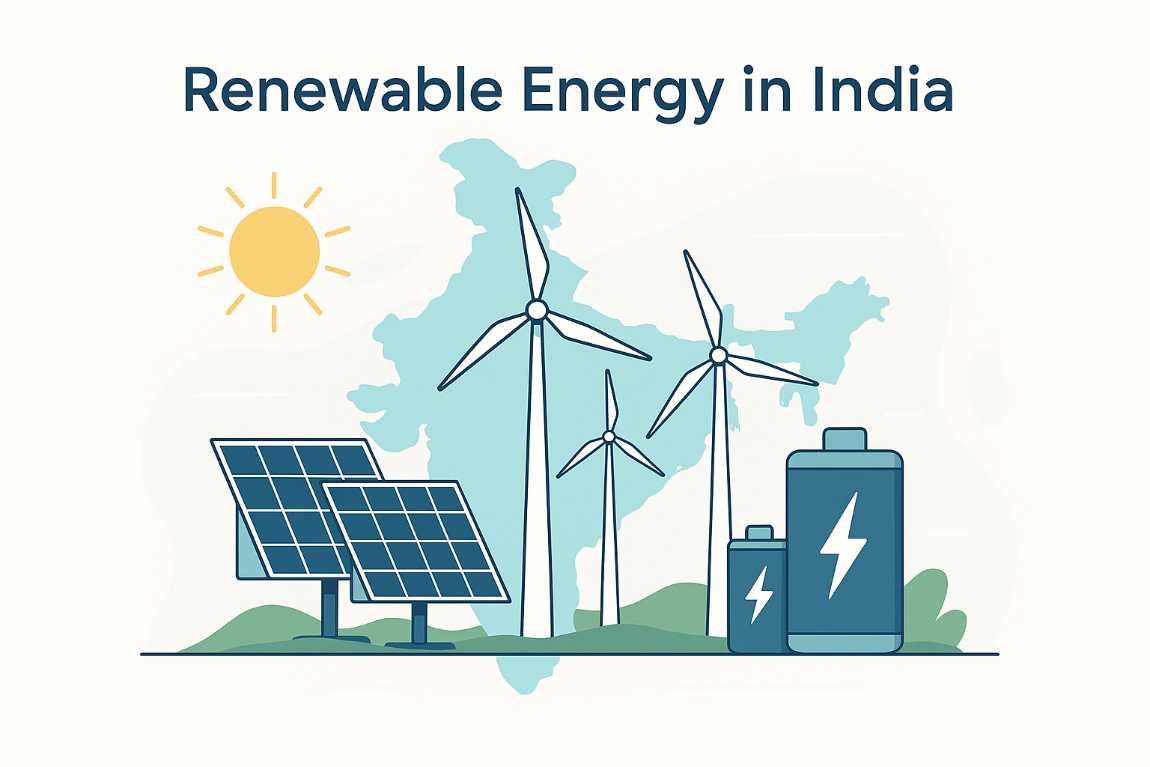
Solar energy continues to lead the sector’s expansion, supported by declining technology costs, large utility-scale projects, rooftop solar installations, and government incentive programmes. Wind energy is also witnessing renewed growth, particularly through hybrid renewable projects that combine solar, wind, and battery storage to provide reliable electricity generation. The integration of energy storage systems is becoming increasingly important in ensuring grid stability as renewable energy’s share in the power mix rises.
The renewable energy transition is also expected to create significant economic opportunities. Industry estimates suggest that the sector could attract investments exceeding US$250 billion by 2030 across solar power generation, battery manufacturing, green hydrogen production, and associated infrastructure. These investments are likely to generate employment, strengthen domestic manufacturing, and reduce India’s dependence on imported fossil fuels.
Green hydrogen has emerged as another major growth area within India’s clean energy strategy. Supported by the National Green Hydrogen Mission, the country aims to become a global hub for the production and export of green hydrogen and its derivatives. The initiative is expected to accelerate decarbonisation in sectors such as steel, fertilisers, refining, and heavy transport while opening new export opportunities in international markets.
Technological innovation is further accelerating the sector’s growth. Advancements in artificial intelligence, smart grids, digital monitoring systems, battery technologies, and predictive maintenance are improving the efficiency and reliability of renewable energy assets. These innovations are helping developers optimise project performance while lowering operational costs and enhancing power generation.
Government support remains a critical driver of the industry’s expansion. Policy measures such as production-linked incentive (PLI) schemes for solar manufacturing, renewable energy auctions, transmission infrastructure development, and simplified approval processes are encouraging rapid capacity additions. Continued investments in grid modernisation and energy storage are also expected to improve the integration of renewable power into the national electricity network.
Despite the positive outlook, challenges remain. Land acquisition, transmission bottlenecks, financing requirements, and supply chain constraints continue to affect project execution. Industry experts believe that addressing these issues through coordinated policy reforms and infrastructure investments will be essential for sustaining long-term growth and achieving national clean energy targets.
With strong policy backing, increasing private sector participation, and continuous technological progress, India’s renewable energy sector is well positioned for transformational growth. As clean energy becomes a larger component of the country’s power system, it is expected to strengthen energy security, support economic development, reduce carbon emissions, and reinforce India’s position as a global leader in the transition towards sustainable energy.







Comments are closed