

SOCOMEC Group and the Indo-French Chamber of Commerce & Industry (IFCCI) have launched Project Edu-Sustain, a comprehensive Corporate Social Responsibility (CSR) initiative focused on education, renewable energy, and plastic waste management. The programme aims to create long-term social and environmental impact by integrating community development with sustainability-driven interventions across multiple regions in India.
A major component of the initiative focuses on promoting clean energy in educational institutions. Under the project, solar panel systems have been installed in seven government schools—two in Chennai and five in Noida and Greater Noida. These installations are expected to generate between 35,000 and 50,000 kilowatt-hours of renewable energy annually, helping schools reduce dependence on conventional power sources while lowering carbon emissions. The initiative is also expected to create more energy-efficient learning environments for students.
Education remains another key pillar of Project Edu-Sustain. The programme continues to support educational centres established in 2024 for children from underserved and high-risk communities. Currently, these centres provide after-school academic assistance, mentoring, and creative learning opportunities to more than 80 primary-level students. The objective is to improve learning outcomes, strengthen foundational education, and reduce school dropout rates among vulnerable children.
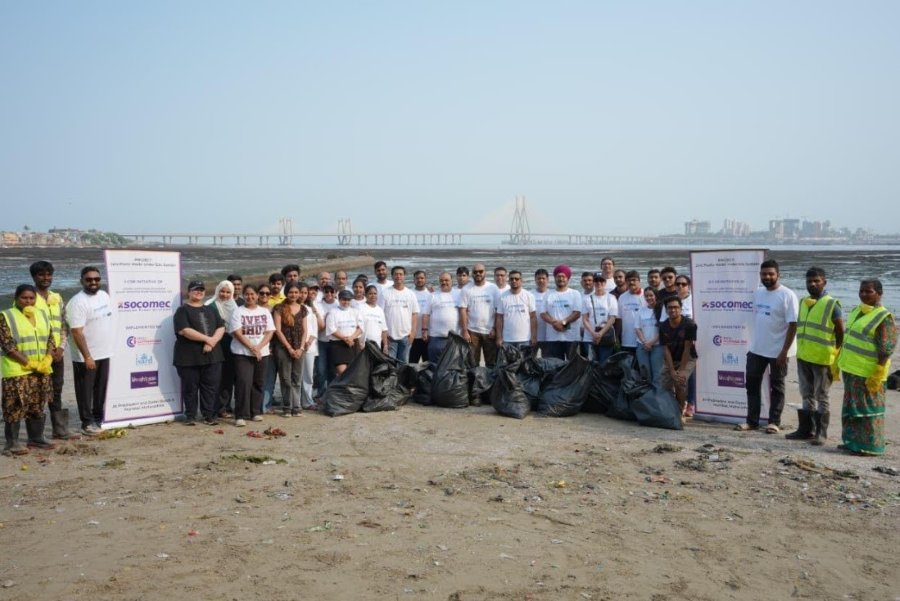
The initiative also places significant emphasis on environmental conservation through its Zero Plastic Waste Management programme. As part of this effort, Prabhadevi and Dadar beaches in Mumbai have been adopted for regular clean-up and waste management activities. Through systematic collection and recycling efforts, the project is expected to process more than 15,000 kilograms of marine plastic waste annually. The collected plastic is being recycled and upcycled into useful products, creating livelihood opportunities for local waste pickers while supporting the circular economy.
Employee engagement forms an important part of the project’s implementation strategy. More than 35 employees from SOCOMEC and IFCCI have participated in volunteering activities at educational centres in Delhi and beach clean-up drives in Mumbai. These activities are designed to encourage community involvement while promoting awareness about sustainability, environmental protection, and responsible waste management among employees, students, and local residents.
According to SOCOMEC leadership, the initiative reflects the company’s commitment to integrating sustainability into its business practices and community outreach efforts. Company representatives highlighted that Project Edu-Sustain combines clean energy adoption, educational support, and environmental stewardship to generate meaningful and measurable impact at the grassroots level. The active participation of employees has further strengthened the programme’s reach and effectiveness.
IFCCI officials described education and sustainability as critical drivers of long-term social transformation. Through collaboration with SOCOMEC, the chamber aims to create opportunities that empower communities while advancing environmental responsibility. The partnership demonstrates how businesses and industry organizations can work together to address social and ecological challenges through innovative CSR interventions.
Project Edu-Sustain aligns with several United Nations Sustainable Development Goals (SDGs), including quality education, affordable and clean energy, responsible consumption and production, climate action, and sustainable communities. By combining educational support, renewable energy solutions, and environmental conservation initiatives, the programme seeks to create a scalable model for sustainable community development.
As the initiative expands, SOCOMEC and IFCCI plan to continue strengthening access to education, promoting renewable energy adoption, and supporting environmental conservation through community-driven interventions. The programme reflects a growing commitment among corporations to create lasting social impact while contributing to a cleaner, greener, and more inclusive future.





Comments are closed