


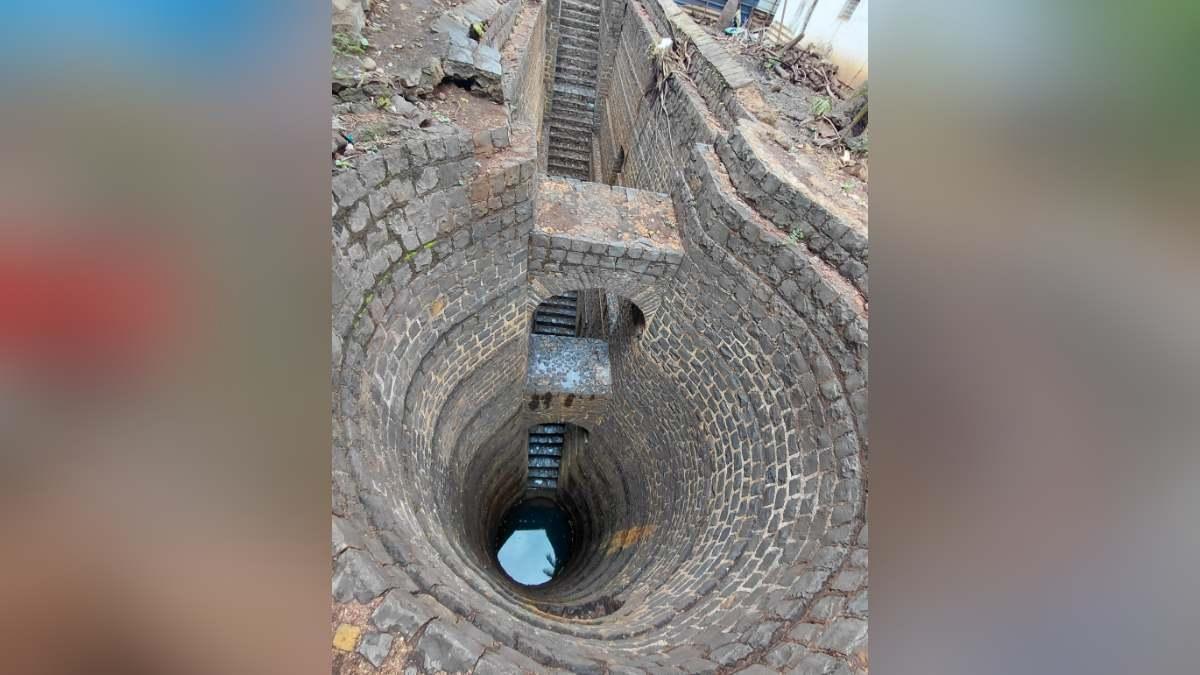
A centuries-old stepwell in Karnataka has been restored to its former glory through a collaborative effort by local villagers and a non-governmental organisation, demonstrating how community participation can help preserve heritage while addressing water conservation challenges.
Located in a village in Karnataka, the medieval-era stepwell, believed to be around 800 years old, had fallen into severe neglect over the decades. Layers of silt, debris, overgrown vegetation and waste had rendered the historic structure almost unusable. Once a vital source of water for the local community, the stepwell had gradually lost its significance due to changing water supply systems and years of neglect.
Recognising both its historical and environmental value, a local NGO joined hands with village residents to undertake an extensive restoration project. The initiative focused on cleaning the structure, removing accumulated silt and waste, repairing damaged stone masonry, and restoring the original architectural features without compromising the heritage character of the monument.
The restoration was largely driven by community participation, with villagers volunteering their time and labour throughout the project. Their involvement not only reduced restoration costs but also strengthened local ownership of the heritage asset. Residents worked alongside conservation experts to ensure that the stepwell was revived using methods that respected its historical design and structural integrity.
Beyond preserving a historical monument, the project has delivered significant environmental benefits. The rejuvenated stepwell now serves as a functional water recharge structure, helping improve groundwater levels in the surrounding area. With increasing concerns over water scarcity and erratic rainfall, traditional water conservation systems such as stepwells are once again being recognised for their relevance in promoting sustainable water management.
The restored structure has also become a point of pride for the village. Community members hope it will encourage greater awareness about the importance of protecting heritage sites while inspiring similar restoration efforts in other regions. Local residents believe that preserving such historic water systems not only safeguards cultural identity but also offers practical solutions to contemporary environmental challenges.
Experts involved in the project noted that many ancient stepwells across India remain neglected despite their engineering brilliance and historical significance. Reviving these structures can contribute to groundwater recharge, support biodiversity, and create community spaces while preserving valuable architectural heritage.
The successful restoration highlights the role that partnerships between civil society organisations and local communities can play in conserving historical assets. It also demonstrates that heritage conservation and environmental sustainability can go hand in hand when restoration projects are supported by public participation.
The initiative stands as an example of how traditional knowledge and modern conservation practices can complement each other. As climate change and water stress continue to affect many parts of the country, the revival of ancient water harvesting structures offers a practical and sustainable approach to strengthening local water security.
The restored stepwell now serves not only as a reminder of Karnataka’s rich architectural legacy but also as a symbol of collective action, environmental stewardship and the enduring value of community-led conservation.






Comments are closed