


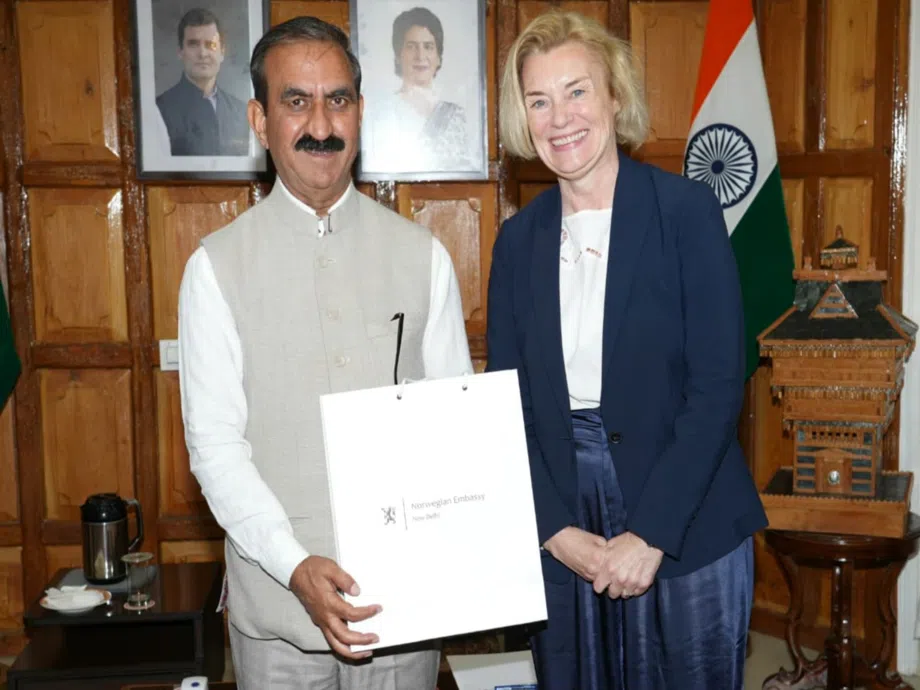
Himachal Pradesh is set to strengthen its sustainable development efforts through a new partnership with Norway, focusing on advanced waste management technologies, environmental conservation, and green economic growth. The collaboration was discussed during a meeting between Himachal Pradesh Chief Minister Sukhvinder Singh Sukhu and Norway’s Ambassador to India, May-Elin Stener, in Shimla.
The proposed partnership aims to leverage Norway’s expertise in waste management, circular economy practices, renewable energy, and climate-resilient urban development. According to state officials, Himachal Pradesh is particularly interested in adopting advanced technologies for the processing and recycling of Construction and Demolition (C&D) waste, an area where Norway has developed significant capabilities. The initiative is expected to help the hill state address growing urban waste challenges while promoting environmentally responsible development.
Beyond waste management, the discussions covered several areas of potential cooperation, including resource recovery, sustainable tourism, waste-free destinations, renewable energy, green transition initiatives, digital governance, and smart city development. The state government believes that learning from Norway’s experience in these sectors can help create innovative and scalable solutions suited to mountainous regions.
Chief Minister Sukhu emphasized that both Himachal Pradesh and Norway share a strong commitment to environmental protection while pursuing economic development. He expressed confidence that the partnership would generate innovative approaches that could benefit not only Himachal Pradesh but also other mountainous regions around the world facing similar environmental and developmental challenges. The Chief Minister highlighted the state’s vision of becoming a leading Himalayan region known for sustainable and environmentally responsible urban growth.
As part of the collaboration, Himachal Pradesh has invited Norwegian institutions, technology providers, researchers, and businesses to work closely with the state government. The administration is seeking support in developing practical solutions that can be replicated across mountain ecosystems, helping improve waste management systems, urban planning, and environmental sustainability. Norwegian companies have also been encouraged to explore investment opportunities in Himachal Pradesh, particularly in sectors such as tourism, renewable energy, and geothermal development.
The partnership aligns with Himachal Pradesh’s broader environmental agenda. The state government is actively promoting the adoption of electric vehicles as part of its efforts to reduce carbon emissions and improve environmental quality. It has also set a target of increasing the state’s green cover from 29.5 percent to 32 percent through community participation and conservation initiatives. These measures are intended to strengthen ecological resilience while supporting sustainable economic growth.
In addition to urban sustainability efforts, the government continues to promote chemical-free natural farming and support rural livelihoods. Minimum Support Prices (MSP) are being provided for crops and agricultural products such as maize, wheat, milk, and raw turmeric to encourage sustainable farming practices while enhancing farmers’ incomes. Officials believe that combining environmental conservation with rural economic development will be key to achieving long-term sustainability goals.
The Himachal-Norway collaboration reflects a growing trend of international partnerships aimed at addressing climate challenges through technology, innovation, and knowledge sharing. By integrating global expertise with local priorities, the state hopes to accelerate its transition toward a greener and more resilient future while creating a model of sustainable development for mountain regions worldwide.







Comments are closed