


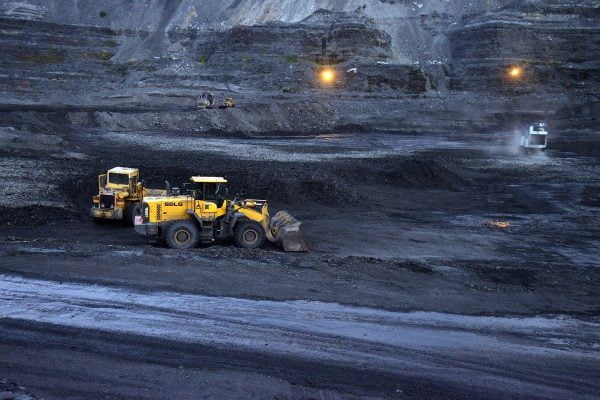
Experts have urged mining companies to align their corporate social responsibility (CSR) activities with India’s larger sustainability and development goals to ensure long-term benefits for local communities. They believe CSR projects in the mining sector should support national programmes such as Skill India, Atmanirbhar Bharat, and the Sustainable Development Goals (SDGs) rather than functioning as isolated welfare efforts.
Industry leaders noted that while mining firms are already spending significant amounts on CSR, the real challenge lies in ensuring accountability, community participation, and measurable outcomes. According to sustainability experts, simply allocating funds is not enough unless local people actively participate in and take ownership of development initiatives. Without community involvement, many welfare programmes fail to create lasting social impact.
Officials from the mining industry highlighted that many companies are already investing heavily in education, healthcare, skill development, sanitation, women empowerment, and livelihood generation in mining regions. Coal India subsidiary South Eastern Coalfields Ltd (SECL), for instance, has reportedly spent over ₹850 crore on CSR initiatives since 2014. The company stated that its efforts focus not only on infrastructure creation but also on empowering youth and women, while helping communities become self-reliant and economically stronger.
Experts stressed that CSR in mining should remain simple and practical, addressing everyday concerns of people living near mining zones. Communities are more likely to support projects linked to basic needs such as clean drinking water, healthcare facilities, rural roads, sanitation, education, and employment opportunities. They argued that companies often overcomplicate CSR through excessive reporting and corporate frameworks, whereas local residents value initiatives that directly improve their daily lives.
Former industry leaders also pointed out that mining activities use national resources and therefore nearby communities should share the benefits of economic growth generated through mineral extraction. They emphasised that local populations must be treated as stakeholders in development, particularly because mining operations are usually carried out in underdeveloped areas. At the same time, communities should also recognise the importance of responsible mining in supporting national economic progress.
Representatives from mining associations said many firms already spend more than the legally mandated two per cent of average net profits on CSR activities. However, experts warned that higher spending alone does not guarantee meaningful impact. Projects should be planned after consulting local residents to ensure they address genuine community needs and priorities. Proper stakeholder engagement, they said, is essential for improving the effectiveness of welfare schemes in mining regions.
The discussion comes at a time when India’s mining industry is increasingly focusing on sustainability, technological advancement, and responsible business practices. Recent reports suggest the sector is moving toward a more data-driven and sustainable model, with greater emphasis on environmental, social, and governance (ESG) standards.








Comments are closed