


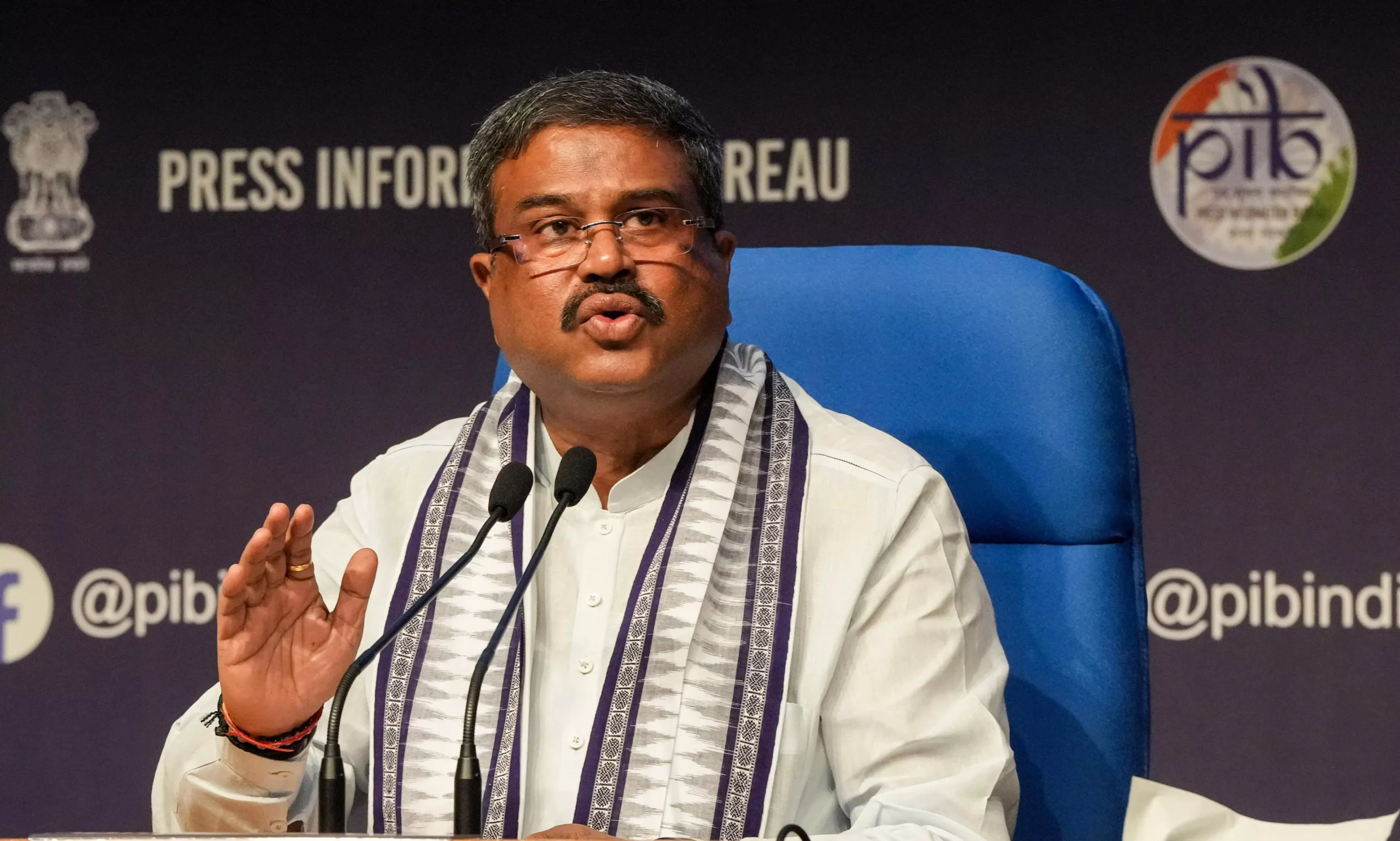
Union Education Minister Dharmendra Pradhan has called on the corporate sector to broaden the scope of Corporate Social Responsibility (CSR) by making the preservation and promotion of India’s traditional crafts a key priority. He emphasized that businesses should play a more active role in safeguarding the country’s rich cultural and artisanal heritage while contributing to the economic empowerment of skilled craftsmen and craftswomen.
Speaking at an event organized by RSB Group at the National Crafts Museum, the minister highlighted the deep connection between India’s textile traditions and the nation’s civilizational identity. According to him, the textile sector is not merely an economic activity but a reflection of India’s history, culture, and creativity that has evolved over centuries.
Pradhan stressed that the corporate world has a unique opportunity to support artisans who possess remarkable skills but often lack access to resources, markets, and modern technology. He urged industries to create platforms that can help these artisans showcase their talent, improve their livelihoods, and reach wider audiences both within India and abroad. Such efforts, he said, would ensure that traditional crafts remain relevant in a rapidly changing economic environment.
The minister also underlined the growing importance of technology in transforming the textile and handicrafts sector. He noted that technological advancements can help artisans improve productivity, enhance product quality, and connect with global markets. However, he emphasized that technology should be used as an enabler that strengthens traditional craftsmanship rather than replacing it. By integrating innovation with heritage, India can create sustainable growth opportunities for millions engaged in the craft ecosystem.
Pradhan further observed that many talented artisans come from ordinary households and rural communities, where traditional skills are passed down through generations. He said CSR initiatives should focus on identifying such talent, nurturing it through training and support, and ensuring that artisans receive the recognition they deserve. Investments in skill development, market access, and technological assistance can significantly improve their socio-economic conditions.
During the event, the minister praised the efforts of RSB Group for its work in identifying and supporting grassroots artists from states such as Jharkhand, West Bengal, Odisha, and Assam. He commended the organization for creating opportunities that help preserve traditional art forms while enabling artisans to improve their livelihoods.
Concluding his address, Pradhan reiterated that preserving India’s craft heritage is a collective responsibility. He urged corporate leaders to view CSR not only as a means of social contribution but also as a powerful tool for cultural preservation, economic inclusion, and nation-building. By investing in artisans and traditional crafts, businesses can help ensure that India’s diverse cultural legacy continues to thrive for future generations while contributing to inclusive growth and sustainable development.







Comments are closed