


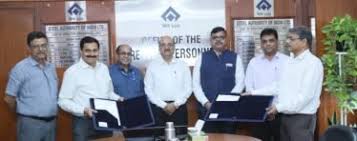
State-owned Steel Authority of India Limited (SAIL) has signed a Memorandum of Understanding (MoU) with EdCIL (India) Limited to establish smart digital classrooms in schools located around SAIL’s operational regions. The initiative, launched under SAIL’s Corporate Social Responsibility (CSR) programme, aims to improve access to quality education and strengthen digital learning infrastructure in underserved communities.
SAIL, a Maharatna public sector enterprise under the Ministry of Steel, is one of India’s largest steel producers. EdCIL, functioning under the Ministry of Education, is a public sector undertaking focused on educational consultancy and project implementation. Through this collaboration, the two organisations seek to bridge the digital divide in education and create technology-enabled learning environments for students studying in remote and industrial areas.
The project will introduce smart classroom facilities equipped with digital teaching tools and modern educational technologies. These classrooms are expected to make lessons more interactive, engaging, and accessible for students. The initiative is also intended to support teachers by enabling innovative teaching methods and providing improved digital resources for classroom instruction.
According to the announcement, the initiative aligns with the objectives of the National Education Policy (NEP) 2020, which emphasizes digital learning, inclusive education, and improved learning outcomes. It also supports the United Nations Sustainable Development Goal 4 (SDG-4), aimed at ensuring equitable and quality education for all.
The MoU was signed in the presence of K. K. Singh, Director (Personnel), SAIL, along with senior officials from both organisations. The agreement highlights SAIL’s continuing commitment to community development through CSR activities focused on education, healthcare, and social welfare.
Digital classroom initiatives have increasingly become an important part of CSR programmes undertaken by public sector enterprises across India. Similar projects implemented in mining and industrial regions have shown positive outcomes in improving digital literacy, student participation, and overall learning experiences. EdCIL has previously partnered with several PSUs for establishing smart classrooms and ICT labs in government schools, particularly in rural and underprivileged areas.
Education experts believe that integrating technology into classrooms can help students access updated learning materials and develop skills required in a digital economy. Smart classrooms also enable better visual learning through multimedia content, online educational resources, and interactive modules. Such facilities are especially valuable in regions where schools often face shortages of educational infrastructure and trained teaching support.
With this partnership, SAIL and EdCIL aim to create a stronger educational ecosystem in communities surrounding industrial operations. The initiative reflects a broader push by public sector enterprises to contribute to social development while supporting India’s transition toward digitally empowered education systems.






Comments are closed