


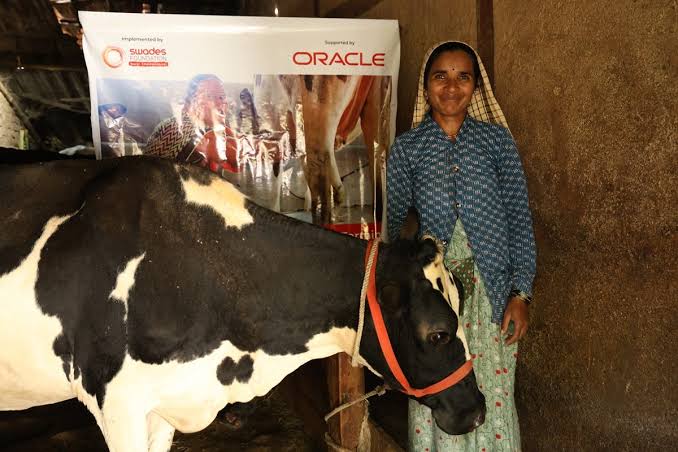
Oracle, in collaboration with the Swades Foundation, has successfully completed the first year of a rural livelihoods programme aimed at strengthening economic opportunities for women in Maharashtra. The initiative has positively impacted more than 900 women farmers and entrepreneurs across Nashik and Raigad districts, helping them improve their incomes through sustainable agriculture, dairy farming, entrepreneurship, and financial literacy.
The programme forms part of the long-standing partnership between Oracle and the Swades Foundation, which focuses on creating sustainable livelihood opportunities in rural communities. By combining skill development, market access, and climate-resilient agricultural practices, the initiative seeks to enhance financial independence among women while promoting long-term rural development.
A major highlight of the project has been the introduction of Safed Musali cultivation among 525 women farmers. Safed Musali is a high-value medicinal crop known for its resilience to changing climatic conditions and strong market demand. Through training and technical support, participating women have adopted the crop as an alternative source of income. The initiative is expected to generate additional annual earnings ranging between ₹25,000 and ₹40,000 per farmer, providing a significant boost to household incomes in rural areas.
In addition to agriculture, the programme has focused on dairy-based livelihoods. Around 373 women received support in the form of high-yield cattle, enabling them to establish or expand dairy enterprises. Dairy farming offers a steady source of daily income and has the potential to generate annual earnings of up to ₹40,000. The initiative has helped women diversify their income streams, reducing dependence on seasonal agricultural activities and increasing financial stability for their families.
To ensure long-term success, the programme also provided training in sustainable farming techniques, dairy management, and financial literacy. Women participants learned methods to improve productivity, manage resources efficiently, and make informed financial decisions. Such capacity-building efforts are intended to help beneficiaries develop self-sustaining enterprises and strengthen their resilience against economic and environmental challenges.
Market linkages have been another critical component of the initiative. By connecting women producers with buyers and commercial networks, the programme has created opportunities for better price realization and improved market access. These linkages are expected to contribute to sustained income growth and help rural entrepreneurs build viable businesses over time.
The project reflects a growing emphasis on women-led rural development in Maharashtra. By equipping women with skills, productive assets, and market opportunities, the programme supports broader goals of economic inclusion and community development. It also highlights the role that corporate social responsibility initiatives can play in addressing livelihood challenges and creating meaningful social impact in rural regions.
Oracle’s collaboration with the Swades Foundation demonstrates how partnerships between corporations and development organizations can generate measurable outcomes for underserved communities. As the programme progresses, it is expected to create additional opportunities for women entrepreneurs and farmers, contributing to stronger rural economies and improved quality of life across Maharashtra.





Comments are closed