


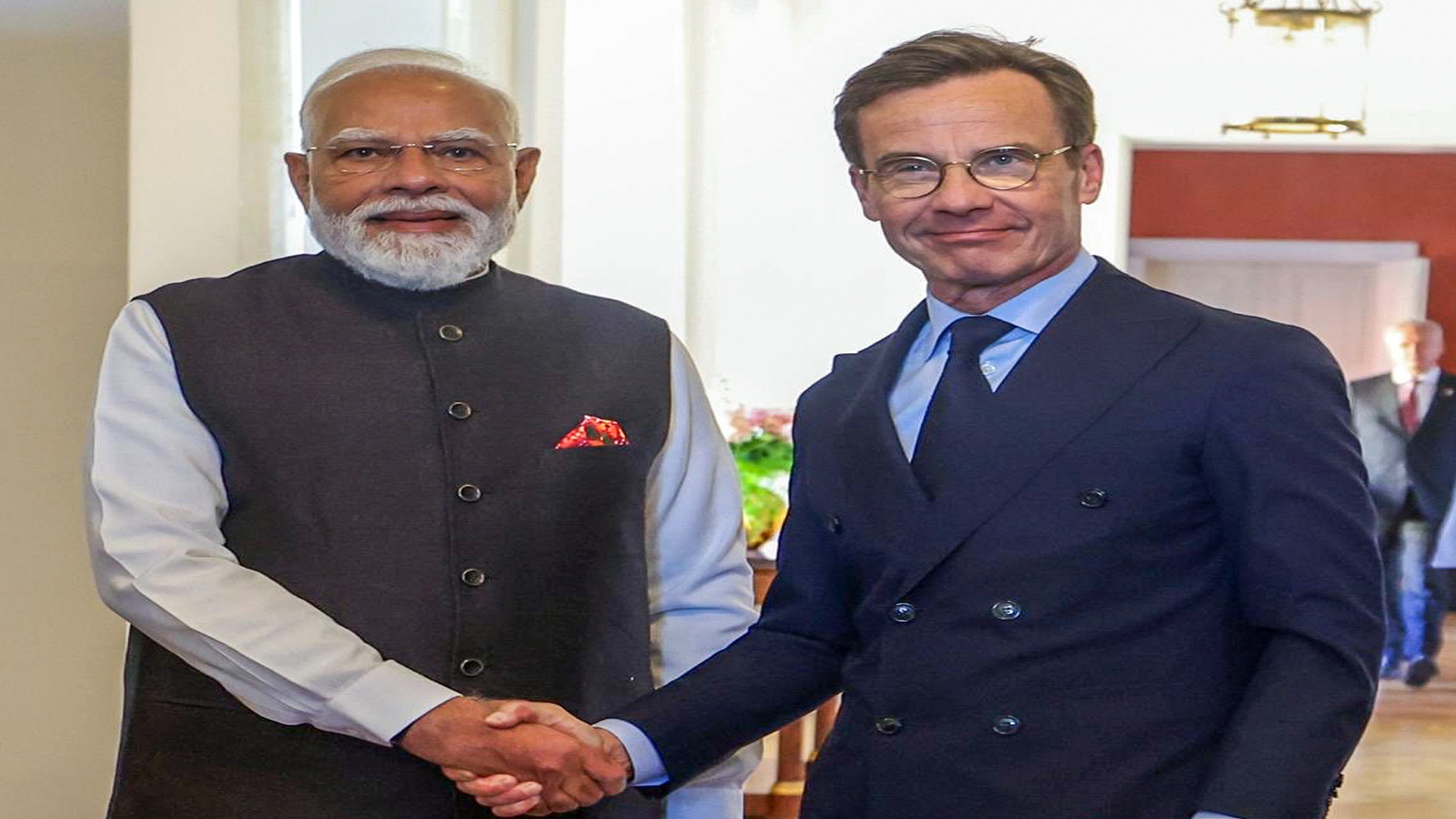
India and Sweden have reaffirmed their commitment to strengthening bilateral cooperation with a renewed focus on green growth, sustainable development, innovation, and resilient supply chains. Prime Minister Narendra Modi and Swedish Prime Minister Ulf Kristersson outlined a shared vision for expanding the strategic partnership between the two nations, emphasizing the importance of collaboration in addressing global environmental and economic challenges.
In a joint opinion article titled “India and Sweden: Delivering Growth, Resilience and Sustainability… Together,” the two leaders highlighted how the partnership has evolved into a forward-looking alliance driven by innovation, clean technologies, and shared prosperity. They stressed that closer cooperation between India and Sweden can play a significant role in promoting sustainable industrial development while creating new economic opportunities for both countries.
The leaders underlined that climate action and economic growth should progress together rather than being viewed as competing priorities. They described sustainable development as one of the defining challenges of the modern era and called for stronger international cooperation to accelerate the global transition toward cleaner and more resilient economies. They also emphasized the need to reform global institutions to better reflect present-day realities and support collaborative solutions to climate and development challenges.
Prime Minister Modi highlighted India’s rapid economic transformation alongside its ambitious clean energy goals. He reiterated India’s vision of becoming a developed nation by 2047 while remaining committed to achieving net-zero carbon emissions by 2070. The country’s expanding renewable energy capacity, investments in clean technologies, and emphasis on sustainable infrastructure were presented as key pillars supporting this long-term vision.
The two leaders also acknowledged Sweden’s achievements in advancing climate-friendly policies and sustainable industrial practices. Sweden’s progress in developing a largely fossil-free electricity grid and reducing greenhouse gas emissions while maintaining economic growth was cited as an example of how environmental responsibility and economic competitiveness can complement each other. This shared commitment provides a strong foundation for expanding cooperation in clean energy, industrial innovation, and green technologies.
A major focus of the partnership is the Leadership Group for Industry Transition (LeadIT), an initiative jointly launched by India and Sweden in 2019 with support from the United Nations. The initiative has emerged as an important global platform for promoting industrial decarbonization, encouraging low-carbon technologies, and supporting sustainable manufacturing practices across industries. Both leaders reaffirmed their commitment to strengthening LeadIT and expanding its global impact through deeper international collaboration.
Recognizing growing geopolitical uncertainties and increasing pressure on global supply chains, the Prime Ministers called for enhanced cooperation in critical sectors such as clean technology, sustainable finance, industrial innovation, and resilient supply networks. They encouraged greater participation from other countries, particularly Nordic nations, in advancing these shared goals and scaling up climate-focused partnerships over the coming years.
The leaders concluded that no single country can independently address the complex challenges associated with climate change, energy security, or critical technology development. Instead, they emphasized that international partnerships built on trust, innovation, and shared responsibility will be essential for building a more sustainable and resilient future. By strengthening bilateral cooperation, India and Sweden aim to create a model of industrial collaboration that supports economic growth while accelerating the global transition to a greener economy.





Comments are closed