


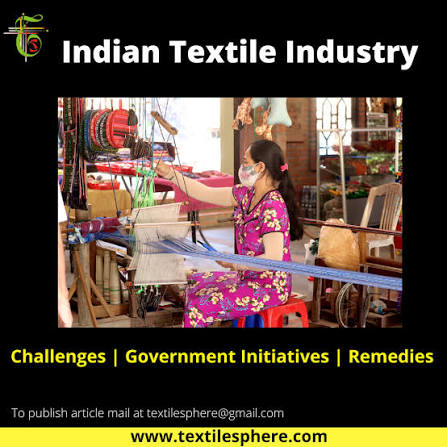
India’s textile industry is undergoing a significant transformation as sustainability and circular economy principles become central to its long-term growth strategy. Faced with rising environmental concerns, evolving global regulations, and increasing demand for eco-friendly products, textile manufacturers are adopting resource-efficient production methods, recycling technologies, and waste reduction practices to strengthen their competitiveness in international markets.
The textile sector, one of India’s largest employers and export contributors, has traditionally followed a linear production model based on extracting raw materials, manufacturing products, and disposing of waste. However, the industry is now shifting towards a circular economy, where materials are reused, recycled, repaired, and regenerated to minimise waste and maximise resource efficiency. This transition is expected to reduce environmental impact while creating new business opportunities across the textile value chain.
Industry experts believe the move is being driven by multiple factors, including stricter sustainability requirements from international buyers, particularly in Europe, where new environmental regulations are reshaping global textile trade. Indian exporters are increasingly investing in cleaner manufacturing processes, recycled fibres, water-efficient dyeing technologies, and traceability systems to comply with emerging global standards and maintain market access.
Government support is also accelerating the sector’s sustainability journey. Policy initiatives, infrastructure development, and industry collaborations are encouraging textile companies to adopt circular production models and improve waste management. Recent studies by the Ministry of Textiles have highlighted the vast potential of textile waste recycling and the development of organised collection, sorting, and processing systems that can transform discarded textiles into valuable raw materials for new products.
Innovation is playing a crucial role in this transition. Startups, technology providers, and established manufacturers are developing solutions that enable fibre-to-fibre recycling, chemical recycling of blended fabrics, digital product passports, and improved supply chain transparency. These technologies help reduce dependence on virgin raw materials while lowering carbon emissions, water consumption, and landfill waste generated by textile production. Industry leaders believe such innovations will strengthen India’s position as a preferred sourcing destination for sustainable textiles.
Small and medium enterprises (SMEs), which form a significant part of India’s textile ecosystem, are also gradually embracing sustainable manufacturing. While challenges such as high investment costs, limited recycling infrastructure, and technology adoption remain, industry associations and government programmes are working to improve awareness, facilitate financing, and promote best practices across the sector. Collaboration between manufacturers, recyclers, brands, policymakers, and consumers is expected to play a vital role in building a fully circular textile economy.
Experts note that sustainability is no longer viewed merely as an environmental responsibility but as a strategic business imperative. Global consumers are increasingly demanding products that are ethically sourced, recyclable, and environmentally friendly, prompting brands to redesign products with durability and recyclability in mind. Circular business models, including textile recycling, garment repair, resale, and upcycling, are emerging as important growth areas that can generate employment while reducing resource consumption.
As India seeks to expand its textile exports and strengthen its position in global supply chains, adopting circular economy principles is expected to become a defining factor in the industry’s future. By integrating sustainability into every stage of production—from fibre sourcing and manufacturing to consumption and recycling—the textile sector aims to balance economic growth with environmental responsibility. Industry stakeholders believe this transformation will enhance global competitiveness, improve resource efficiency, and support India’s vision of becoming a leading hub for sustainable textile manufacturing.





Comments are closed