


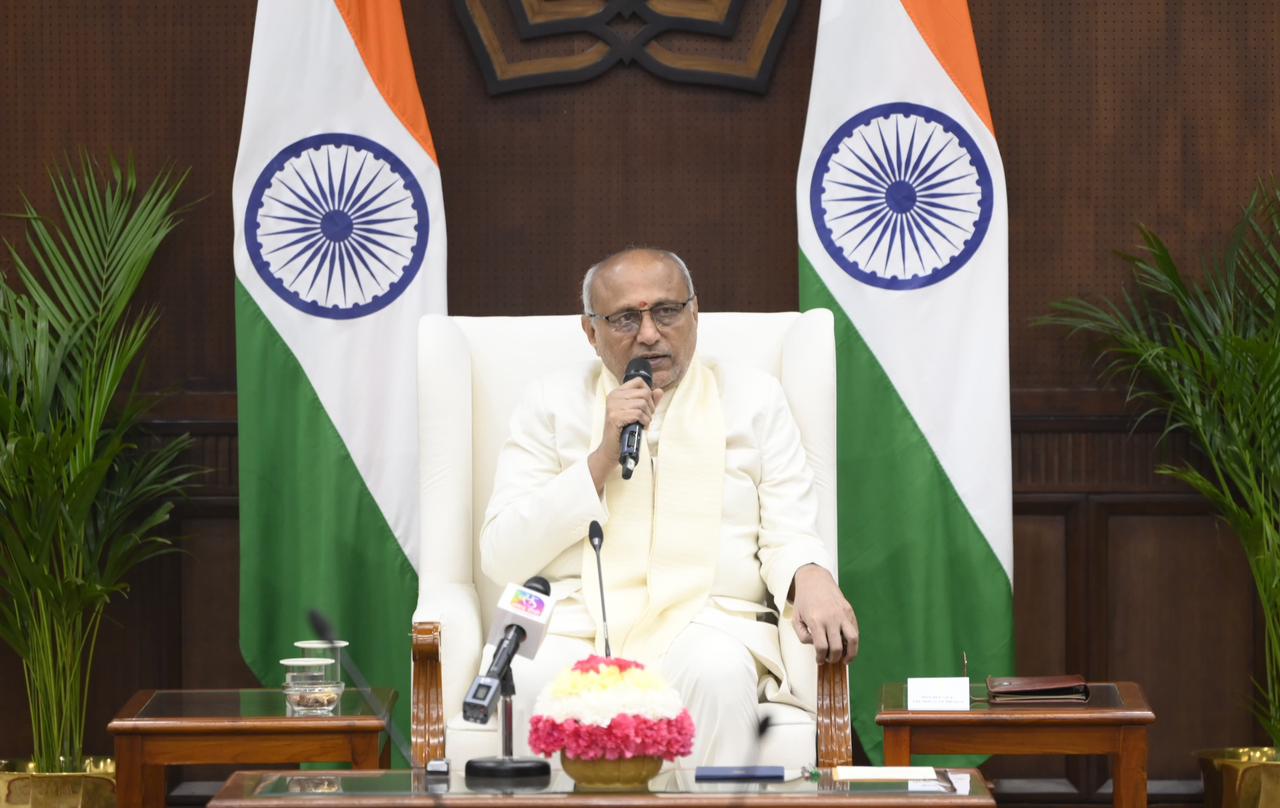
Vice President C. P. Radhakrishnan has emphasized that Corporate Social Responsibility (CSR) has evolved from being a supplementary business activity to becoming a crucial pillar of India’s development journey. Addressing the National CSR Summit 2026 in New Delhi, he highlighted the growing role of corporate participation in addressing social and developmental challenges across the country.
The Vice President noted that CSR initiatives have the potential to bring meaningful change in key sectors such as education, healthcare, and skill development. He stated that corporate organizations can significantly contribute to strengthening the public education system, improving primary healthcare services, and creating industry-aligned skill development programs that meet the evolving needs of society. According to him, such efforts can help bridge developmental gaps and support the government’s vision of inclusive growth.
Highlighting India’s progress over the past decade, Mr. Radhakrishnan said the country has witnessed substantial structural reforms, rapid infrastructure development, expanded digital connectivity, and greater financial inclusion. These initiatives, he observed, have improved the quality of life for millions of citizens and contributed to lifting large sections of the population out of poverty. He added that sustained economic reforms and welfare-oriented policies have strengthened India’s position on the global stage.
The Vice President also pointed out that India’s economic transformation has been remarkable, with the nation emerging as the world’s fourth-largest economy. He attributed this achievement to consistent policy measures, technological advancements, entrepreneurial growth, and the collective efforts of both the public and private sectors. He stressed that maintaining this momentum will require stronger collaboration among government institutions, businesses, and civil society organizations.
Underscoring the importance of responsible corporate engagement, Mr. Radhakrishnan said that businesses today are expected to contribute not only to economic growth but also to social well-being. He encouraged corporate entities to view CSR as an investment in the nation’s future rather than as a statutory obligation. By focusing on long-term community development and sustainable practices, companies can create lasting social impact while also supporting national priorities, he said.
The Vice President further observed that effective CSR programs can complement government efforts in achieving equitable development. Initiatives aimed at improving educational opportunities, healthcare accessibility, environmental sustainability, and employment generation can help create a more resilient and prosperous society. He urged stakeholders to adopt innovative approaches and work collectively to maximize the reach and effectiveness of CSR interventions.
Concluding his address, Mr. Radhakrishnan reiterated that CSR has become an essential component of nation-building. He called upon businesses to actively participate in shaping a stronger, more inclusive, and future-ready India. Through strategic investments in social development, he said, the corporate sector can play a transformative role in advancing the country’s aspirations and ensuring that the benefits of growth reach every section of society.







Comments are closed