


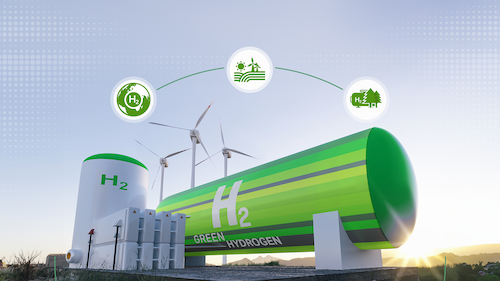
India must accelerate investments, strengthen policy support, and encourage collaboration across industry to unlock the full potential of its green hydrogen sector, according to experts speaking at the Global Hydrogen & Renewable Energy Summit 2025 in Kochi. The panel discussion focused on the financial, technological, and policy measures needed to build a competitive green hydrogen ecosystem and position India as a global clean energy leader.
Industry leaders noted that green hydrogen has the potential to transform India’s energy landscape by reducing dependence on fossil fuels, lowering carbon emissions, and creating new economic opportunities. However, achieving these goals will require significant investments across the entire value chain, including renewable power generation, hydrogen production, storage, transportation, and distribution infrastructure.
The discussion highlighted the importance of developing commercially viable projects through long-term planning and strategic partnerships. Experts said long-term offtake agreements between producers and consumers can provide the financial certainty required to attract investors and support large-scale hydrogen production. Stable demand from industries such as refineries, fertiliser manufacturing, steel, chemicals, and heavy transport will be essential for expanding the market.
Panelists also stressed the need for coordinated efforts among governments, private companies, financial institutions, and research organisations. A collaborative approach, they said, can help address investment risks while accelerating the commercial deployment of green hydrogen technologies. Stronger cooperation between technology developers and manufacturers will also improve production efficiency and lower costs over time.
Innovation emerged as another major theme during the discussion. Experts called for greater investment in research and development to improve electrolyser technologies, increase production efficiency, and develop cost-effective hydrogen storage and transportation solutions. Advancements in technology are expected to make green hydrogen more affordable and competitive with conventional fuels, encouraging wider adoption across industries.
The panel also emphasised that supportive policy frameworks will play a critical role in scaling the sector. Consistent regulations, financial incentives, and simplified approval processes can boost investor confidence and accelerate project implementation. Participants noted that a predictable policy environment is essential for attracting both domestic and international capital into India’s emerging hydrogen economy.
Experts further pointed to India’s abundant renewable energy resources as a significant competitive advantage. With large-scale solar and wind capacity, the country is well positioned to produce green hydrogen at competitive costs while meeting domestic demand and exploring export opportunities in the future. Continued investments in renewable energy infrastructure will therefore remain central to the success of the hydrogen ecosystem.
Concluding the discussion, the panel agreed that India’s green hydrogen ambitions can be realised through sustained investments, technological innovation, industry partnerships, and supportive government policies. By creating a strong ecosystem that connects producers, consumers, investors, and researchers, the country can accelerate its clean energy transition while strengthening energy security, supporting industrial decarbonisation, and generating long-term economic growth.







Comments are closed